
Container Houses: Design Trends And Construction Methods For 2026

Material selection, durability, and lifecycle considerations for container housing
Material choice influences longevity and maintenance needs in container-based dwellings. Corten steel offers atmospheric corrosion resistance when properly maintained, but areas subject to pooling water or abrasive wear may still require local corrosion control. Interior finishes and insulation materials are selected not only for thermal properties but also for compatibility with metal substrates and for ease of repair. Designers may favor assemblies that permit periodic inspection of critical interfaces, such as welded reinforcements and connector plates, to identify early corrosion or fatigue.
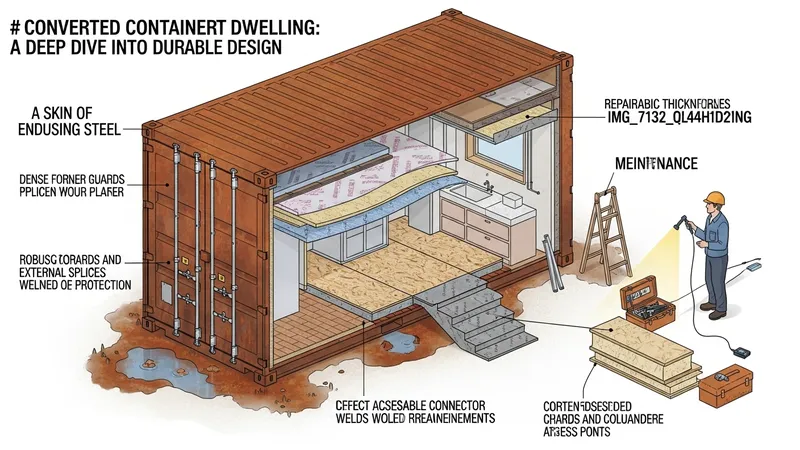
Lifecycle thinking often includes repairability and potential reuse. Details that facilitate replacement of floor panels, external cladding, or insulation layers can extend service life and reduce embodied waste. Where units are transported multiple times, robust corner and splice protection may minimize damage. Designers sometimes quantify typical maintenance tasks and intervals as part of project planning so that stakeholders can anticipate access needs and ongoing costs without assuming exceptional durability without upkeep.
Environmental and embodied carbon considerations frequently connect back to insulation and reinforcement choices. Using lower-carbon insulation materials or designing for minimal added steel can reduce embodied impacts, while modular reuse and adaptability may lower lifetime resource consumption. Metrics and modeling may be used to compare scenarios, but results often depend on assumptions about service life, maintenance, and eventual deconstruction pathways rather than being intrinsic to a single material choice.
Cost and regulatory drivers intersect with technical choices. Local building codes, fire separation requirements, and wind or seismic design loads typically define minimum reinforcement and insulation levels, and permit processes can affect prefabrication strategies. Budgets may influence the balance between factory work and field adaptation; designers often present several assembly options that show how different insulation or reinforcement approaches may trade off upfront cost, on-site labor, and long-term maintenance needs. Continued reading of technical references and local regulations can inform these trade-offs without implying singular solutions.