
Cloud Billing Management: Key Features, Modules, And Workflow Overview

Operational workflow and integrations for Cloud Billing Management: Key Features, Modules, and Workflow Overview
An operational billing workflow typically follows a cycle: collect usage, normalize records, apply rating, generate invoices, distribute invoices, and reconcile payments. For French organisations, each step may include localisation needs such as TVA calculation, French-language invoice text, and legal mention insertion. Integrations with identity providers, provisioning systems, and ticketing tools help attribute usage to customers and to handle disputes or corrections. Operational runbooks often describe billing calendars, cut-off times, and roles involved in approval and exception handling.
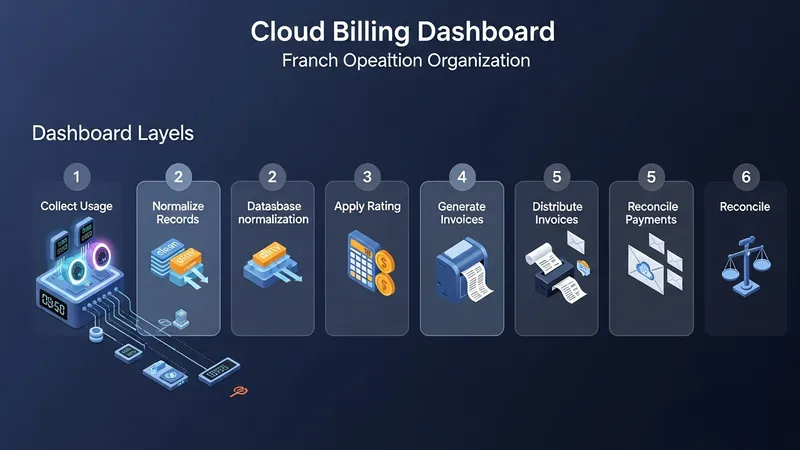
Integration with accounting and ERP systems is common in France to ensure consistency between revenue recognition and recorded invoices. Billing platforms may export journal entries or provide API connectors to local accounting suites. Reconciliation processes match bank payments — often via SEPA bank transfers — to open invoices; discrepancies trigger dispute workflows that may involve credit memos or corrective invoicing. Keeping these integrations auditable supports compliance and internal control requirements.
Capacity and scalability planning affects operational reliability. Billing systems may process large volumes of small events (e.g., object storage requests) or fewer high-value events (e.g., reserved compute contracts), and architectures often scale differently for each pattern. In France, peak usage periods driven by local business cycles can influence batching schedules and processing windows. Operational teams commonly measure processing latency, error rates in mediation, and billing run durations to plan for hardware and software capacity.
Change management and version control for billing rules and templates are operational practices that help avoid revenue leakage and customer confusion. When pricing tables or tax treatments change, organisations often maintain staged deployments and communicate expected impacts internally. In a French regulatory context, preserving historical rule versions and invoice copies supports audits and tax inspections; therefore, systems often include archival mechanisms and clearly documented change logs to record when and how billing logic evolved.