
Cloud Billing Management: Key Features, Modules, And Workflow Overview

Pricing models and rating engines in Cloud Billing Management: Key Features, Modules, and Workflow Overview
Pricing models in cloud environments commonly include pay-per-use, reserved capacity, and subscription plans, each requiring different rating logic. Pay-per-use maps each normalized unit to a unit price and may include tiered thresholds where per-unit price decreases with volume. Reserved or committed models typically apply a fixed recurring charge and adjust per-use billing with offsets or credits. French providers and cloud operators often publish example price pages in euros that illustrate typical ranges for instance types, storage and bandwidth, and billing systems frequently import these published rates into their rating rules.
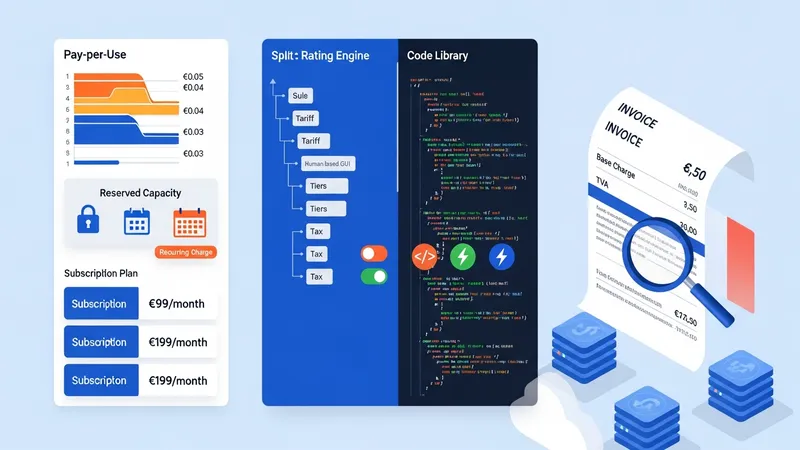
Rating engines can be implemented as rule-based systems or as code libraries invoked during billing runs. Rule-based engines allow business users to declare tariffs, tiers, and taxes in a structured format without code changes, while library-based implementations may offer tighter integration with real-time services. When operating in France, teams commonly ensure rating outputs include separate lines for base charge and TVA to align with French invoicing practice and to facilitate accounting reconciliation.
Testing rating logic is a critical operational step: synthetic usage scenarios are often generated to verify tier transitions, discount application, and tax calculation. In France, accounting and audit teams may request demonstration invoices that show the TVA calculation and legal invoice fields; therefore billing test suites often include cases specific to French tax treatment and invoice presentation. Careful versioning of rating rules helps preserve historical invoiceability and supports regulatory record-keeping.
Interfacing rating results with payment and collections systems completes the monetisation path. Billing systems typically export invoice lines and totals to accounting modules for journal entry creation. In France, payment terms and remittance methods commonly follow local commercial practice, and integrations may include SEPA remittance details. Teams often treat payment and collections as separate workflows but ensure reconciled results feed back into billing records for completeness and audit traceability.