
Carbon Accounting Software: How Enterprises Track Emissions And Environmental Impact

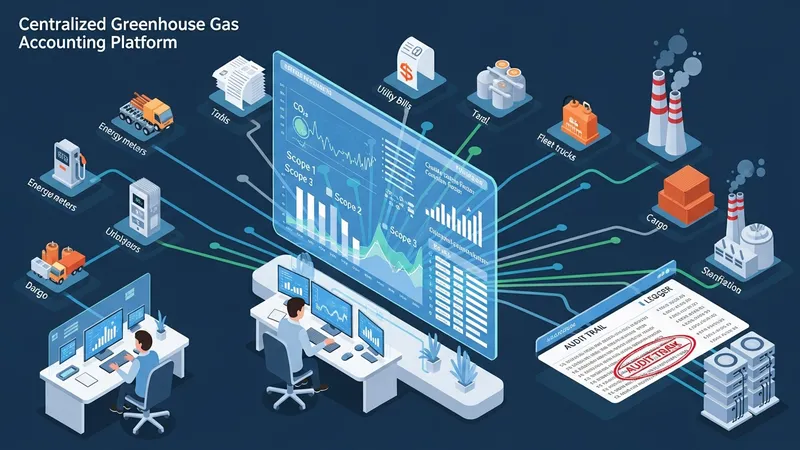
Organizations use specialized software to collect, standardize, and analyze greenhouse gas (GHG) information from operational systems, facilities, and supply chains. These platforms are designed to convert activity data—such as energy meters, fuel usage, and travel records—into emissions estimates using established emission factors and accounting rules. Typical functions include data ingestion from meters and enterprise resource planning (ERP) systems, mapping of emission sources, application of scope classifications, and storage of time-series records for auditing and trend analysis.
The software may support automated collection via APIs, manual uploads, and integration with utility bills or building management systems. It often implements protocols for emissions calculation, enables data validation workflows, and produces standardized outputs for internal dashboards and external reporting. Many enterprises in the United States use such tools to organize disparate data, maintain audit trails, and prepare the information that may be required by investors, regulators, or voluntary disclosure frameworks.
- Salesforce Sustainability Cloud — A United States-based enterprise-grade solution that typically integrates CRM data and energy records to produce emissions inventories and analytics for organizational reporting.
- Microsoft Sustainability Manager — A platform from a US company that can centralize emissions data, apply common calculation methods, and link to Microsoft cloud services for data workflows.
- EPA Center for Corporate Climate Leadership — A US federal guidance resource that outlines inventory approaches and reporting considerations often referenced by enterprises building internal accounting practices.
Enterprises may compare how different systems handle data sources, traceability, and calculation logic. Some platforms prioritize automated integration with utility and procurement systems, while others focus on manual data entry and document-based verification. Calculation logic commonly aligns with frameworks such as the Greenhouse Gas Protocol or EPA guidance; software may allow selection of region- or sector-specific emission factors. Data governance features—user access controls, audit logs, and versioning—often differ and can influence internal workflows for inventory reviews and external assurance.
Data quality and completeness are recurring technical challenges. Emissions estimates often rely on a mix of measured data, engineering estimates, and supplier-provided information; software tools may include features for uncertainty annotation, flags for missing data, and routines to apply default emission factors when primary data are unavailable. In the United States, organizations may need to reconcile state-level reporting requirements and voluntary frameworks. Effective adoption typically involves mapping data pipelines, defining responsibilities, and establishing periodic reconciliation processes to reduce discrepancies over time.
Integration with financial and operational systems can affect the pace and scope of implementation. Common integrations include energy management systems, procurement platforms, fleet telematics, and travel booking systems. Implementations in US enterprises often proceed in phases—starting with scope 1 and 2 emissions where metered energy and fuel data are available, then expanding to scope 3 categories that involve supply chain and upstream/downstream activities. Software that supports modular configuration may help organizations scale from pilot projects to enterprise-wide accounting.
Reporting outputs are shaped by intended uses such as internal performance monitoring, investor disclosures, or regulatory submissions. Outputs may include time-series dashboards, standardized emissions statements, and data exports compatible with reporting templates used by frameworks like CDP or the Greenhouse Gas Protocol. Third-party verification or assurance may be sought to increase credibility; software that documents source data and calculation steps typically eases that process. The next sections examine practical components and considerations in more detail.