
Business Phone Systems: Key Features, Deployment Options, And Scalability

Security, Compliance, and Operational Management for Business Phone Systems
Security measures for telephone systems commonly include application-layer protections and transport encryption. Protocols such as TLS for SIP signaling and SRTP for media streams may be applied to reduce eavesdropping risk. U.S. entities often evaluate the extent to which vendors support these protocols and how encryption keys are managed. In addition, session border controllers and firewall rules are typically configured to limit exposure to the public Internet and to filter malformed or suspicious SIP traffic.
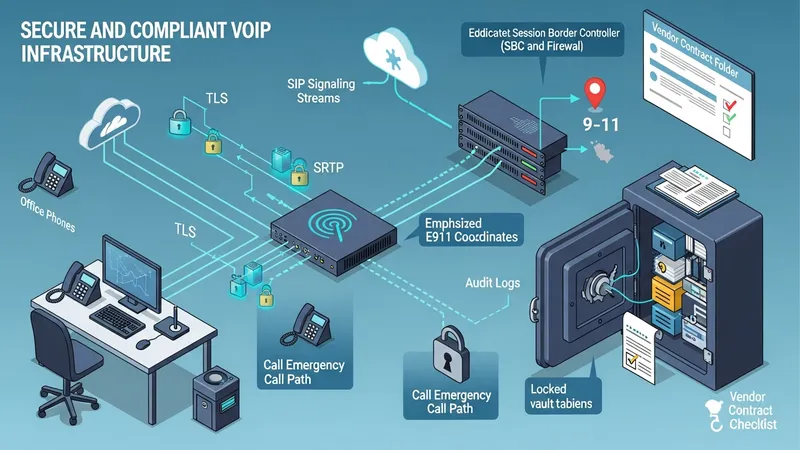
Regulatory and compliance considerations can influence system behavior and documentation. In the United States, E911 handling requires that emergency calls convey appropriate location information to public safety answering points; organizations often verify vendor E911 mechanisms and internal processes to maintain compliance. Recordings and call logs may be subject to retention policies, workplace privacy rules, or industry-specific regulations, so operational procedures for access control and audit logging are commonly implemented.
Operational management practices include patching, backup, and incident response procedures. Regular software updates and firmware management for endpoints and appliances reduce exposure to known vulnerabilities. U.S.-based organizations may maintain change-control records and test recovery procedures periodically. Backup strategies for configuration data and voicemail archives vary by deployment type and can influence recovery time objectives during outages or migrations.
Monitoring and capacity review cycles support ongoing reliability. Organizations often combine real-time alerts with periodic capacity reviews to adjust subscribed channels, bandwidth, or compute resources. In the United States, IT teams sometimes coordinate with finance and operations to align subscription tiers or hardware refresh cycles with business forecasts. Documentation of architecture, escalation paths, and service dependencies helps maintain continuity and informs future scaling or migration decisions.