
Bookkeeping Software: Understanding Core Modules For Small Business Accounting

Bookkeeping Software: Reporting, Reconciliation, and Account Management
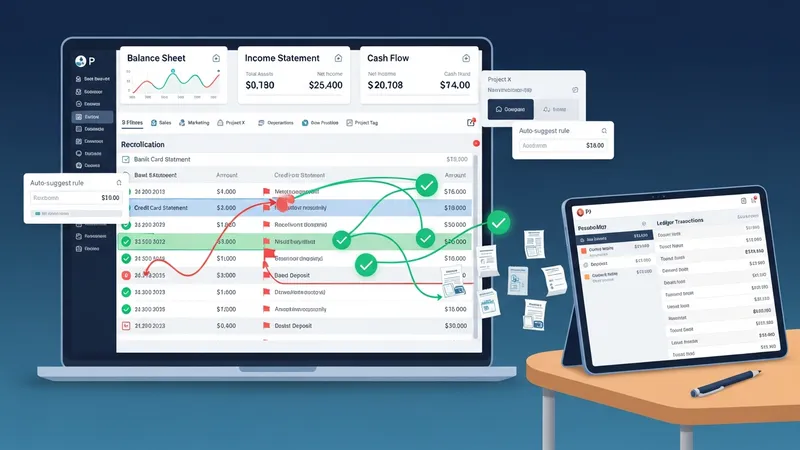
Reporting modules consolidate ledger entries into standard financial statements and customizable summaries. These modules commonly produce balance sheets, income statements, and cash flow-type overviews, and may allow simple customization such as date ranges, departmental filters, or project tags. Users often rely on these reports to monitor trends and to prepare information for external accountants or compliance filings, recognizing that report outputs reflect the accuracy and completeness of underlying entries.
Reconciliation modules match bank and card statements to recorded transactions, suggesting matches and flagging discrepancies for review. These modules may support one-to-one matches, one-to-many consolidations (e.g., several receipts matching one deposit), and auto-suggestion rules that learn from repeated categorization choices. Regular reconciliation is typically recommended as a control measure, and small businesses may reconcile on a cadence that balances workload with the volume of transactions, such as weekly or monthly.
Account management often includes the chart of accounts and settings that define how transactions map to financial statement lines. Properly structured charts of accounts can simplify reporting and reduce reclassification work later. Adjustments, journal entries, and closing period functions are typically part of account management workflows and may require careful documentation when used to correct historical entries or allocate costs across reporting categories.
Finally, audit trails and export capabilities are practical account-management features that support external review and archival needs. The ability to export transaction-level detail and supporting attachments can facilitate collaboration with external accounting professionals and can aid in periodic tax or compliance activities. Clear documentation of internal procedures for exports, reconciliations, and account changes can help maintain consistency across reporting periods.