
Battery Storage Innovation: Key Trends And Technological Advances

Battery storage innovation refers to ongoing advancements in technologies, systems, and approaches used for storing electrical energy in batteries. These innovations address the evolving requirements for efficient energy storage, grid integration, and environmental sustainability. The primary focus areas include improving the performance and longevity of battery systems, optimizing their integration within electricity networks, and supporting the transition to renewable energy sources. Technological progress in this field often revolves around battery chemistry, design, software controls, and the scalability of energy storage solutions.
In the Netherlands, battery storage innovation commonly encompasses research efforts, demonstration projects, and commercial deployments aimed at enhancing energy reliability and supporting the national energy transition framework. Key players may include battery manufacturers, grid operators, research institutions, and policymakers, each contributing to the exploration and implementation of improved storage solutions. Developments in this sector are typically aligned with regulatory objectives, economic feasibility, and the integration of renewable energy generation, such as wind and solar.
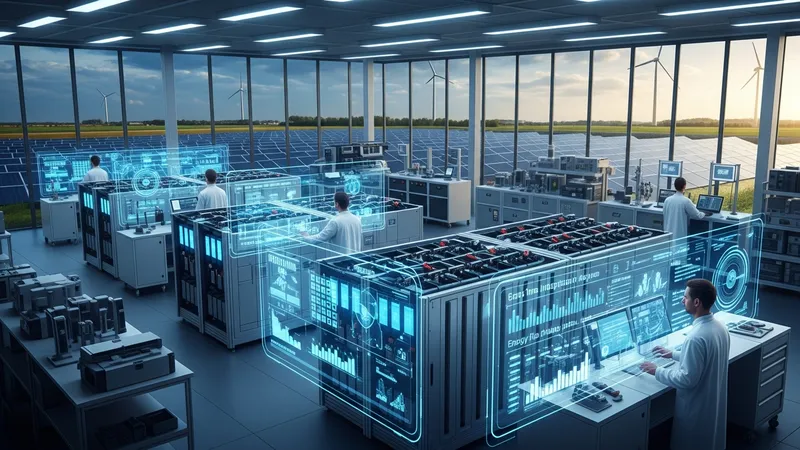
- TNO Advanced Battery Research: Focuses on the development of robust battery chemistries and technologies that support Dutch energy goals.
- ElaadNL Battery Systems Pilot: Demonstrates battery storage applications within electric vehicle charging infrastructure and grid balancing.
- TenneT Grid-Scale Battery Pilots: Large-scale projects integrating batteries into the national grid for congestion management and frequency control.
Battery storage innovation in the Netherlands can be examined through collaborations among public institutions, technology providers, and utilities. These partnerships frequently emphasize testbeds and pilot projects designed to validate emerging technologies under real-world conditions. Collaborations are often structured to generate objective data, support policy design, and facilitate the scaling of proven systems to commercial applications.
One notable trend is the advancement of battery chemistries, such as improvements to lithium-ion and the exploration of alternatives like sodium-ion or flow batteries. Many research efforts are directed at extending the life cycle of batteries, increasing their operational safety, and reducing material costs. These improvements have the potential to enhance the economic and technical feasibility of large-scale storage installations.
System scalability is another important dimension of innovation, as battery storage solutions are increasingly deployed at both distributed and grid-wide levels. Distributed storage, including batteries in homes and businesses, can support demand-side management, while centralized installations aid in transmission and distribution system stability. Projects such as those led by TenneT and ElaadNL reflect this dual approach within the Dutch context.
Smart energy management platforms are integral to optimally integrating batteries with the wider electricity grid. Algorithms and control software enable batteries to respond to variable energy supply from renewables and fluctuating electricity demand. These systems typically aim to maximize resource utilization, minimize grid congestion, and support the provision of ancillary services, such as frequency regulation.
In summary, battery storage innovation in the Netherlands encompasses technological, operational, and systemic advances. These innovations may contribute to greater energy flexibility, support for renewable integration, and improvements in grid reliability. The next sections examine practical components and considerations in more detail.