
B2B Lead Generation Automation: Key Processes And Workflow Fundamentals

Measurement, Reporting, and Compliance Considerations in South Korea
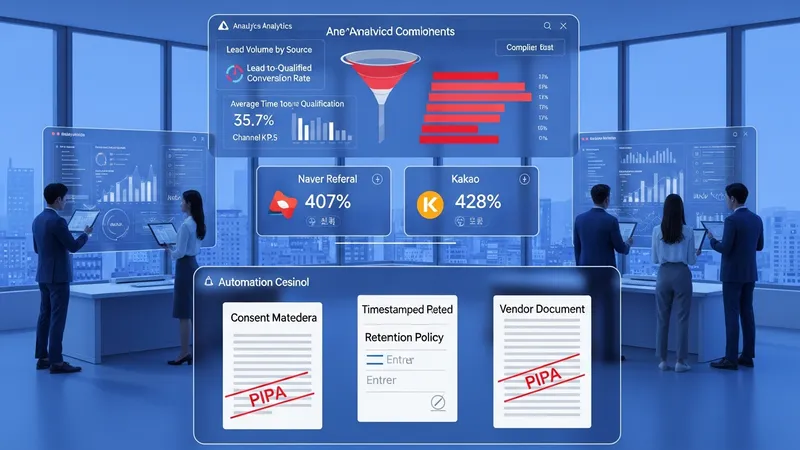
Reporting commonly focuses on a small set of repeatable indicators such as lead volume by source, lead-to-qualified conversion rate, and average time-to-qualification. Dashboards usually combine these metrics with channel-level KPIs to identify underperforming areas. In South Korea, teams often include locally relevant sources such as Naver referral metrics and Kakao engagement counts alongside standard web analytics to provide a comprehensive view of funnel performance.
Privacy and data protection considerations are integral to automated lead workflows in Korea. The Personal Information Protection Act (PIPA) and guidelines from the Personal Information Protection Commission typically inform requirements for consent, data minimization, retention periods, and cross-border transfers. Common practice includes recording consent metadata, applying retention policies in automation systems, and reviewing vendor contracts for processor responsibilities.
Testing and validation are common elements of measurement practice. A/B testing of subject lines, message timing, and nurture sequence length may be used to discover local preferences, and test results are usually interpreted conservatively with attention to sample sizes. Many South Korean teams run pilot campaigns on a small segment before scaling automation to broader audiences so that workflows can be adjusted based on observed engagement patterns.
Vendor selection and operational risk management often weigh factors like language support, local data residency options, and integration capabilities with Korean platforms. Organizations typically document integration points, expected message volumes, and escalation paths for errors or bounce rates. These practices help maintain stable automated operations and facilitate periodic audits of both performance and compliance.