
B2B Lead Generation Automation: Key Processes And Workflow Fundamentals

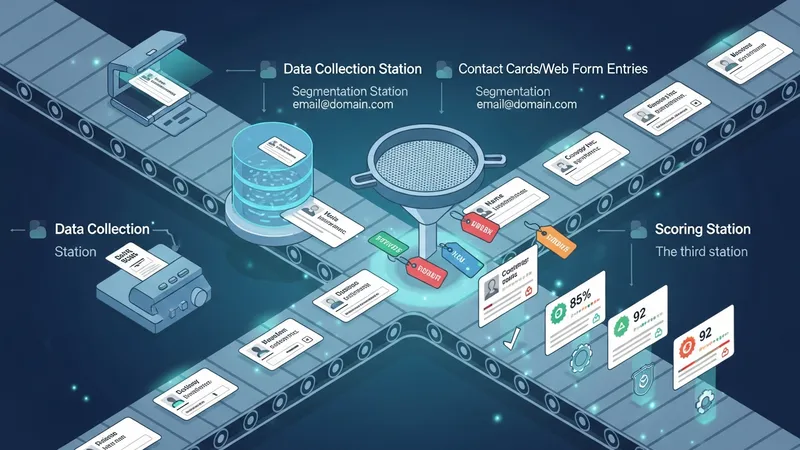
Automated systems for B2B lead generation organize a sequence of tasks that capture, qualify, and nurture commercial prospects using software and predefined rules. In practice this involves connecting web or offline contact points to databases, applying filters or scoring to incoming records, and routing qualified prospects into consistent follow-up sequences. The aim is to reduce manual handoffs and maintain a predictable pipeline of potential customers through repeatable activities rather than ad hoc outreach.
Key process areas often include data collection, segmentation, automated messaging, scoring, and performance measurement. These pieces are typically arranged as workflows that move a contact from initial capture to a qualified status and onward to sales engagement. In South Korea, integrations with local messaging and cloud services may be used to reflect market preferences and regulatory requirements.
- Kakao Work integrations — messaging and notification channels that can be connected to capture enquiries from KakaoTalk users and forward structured lead data into CRM or automation systems.
- Naver Cloud Platform data pipelines — cloud services often used in Korea to host forms, APIs, and ETL processes that move prospect information into central stores for segmentation and analysis.
- Douzone Bizon and domestic CRM providers — Korean CRM and ERP vendors that may be used to manage contact records, sales workflows, and integration with local accounting or administrative systems.
When designing automated capture and segmentation in the Korean market, it is common to consider local touchpoints such as KakaoTalk channels and Naver search forms alongside website forms. Data capture typically includes explicit consent elements to align with South Korean privacy expectations. Captured records are often enriched with firmographic fields (company size, industry, location) and behavioral signals (page views, downloads) before segmentation rules route them into appropriate nurture tracks.
Automated outreach in business-to-business contexts in Korea may combine email with in-app or messaging-channel sequences. For companies operating in South Korea, configuring message cadence and content to work within the technical features of Kakao Work or other local platforms can affect deliverability and engagement. It is common to test different channel mixes and monitor response rates rather than assume one format will perform uniformly across segments.
Lead scoring and qualification frameworks often use a blend of explicit attributes and engagement signals. Typical scoring factors include company scale, job role, expressed interest (such as demo requests), and recent activity. Scores are usually calibrated over time using observed conversion patterns so that threshold values for “qualified” status may change as the business and market context evolve.
Performance tracking and reporting are frequently centralized in dashboards that combine acquisition metrics, conversion rates, and time-in-pipeline. In South Korea, teams often integrate local analytics sources and cloud logs to compile these views. Measurement commonly focuses on reproducible metrics such as lead-to-opportunity rate and average time from capture to qualification, which can be compared across segments or channels to guide adjustments.
To summarize, automated B2B lead generation in South Korea involves a sequence of capture, segmentation, messaging, scoring, and measurement steps that can be configured to local channels and regulatory expectations. Implementations typically evolve through iterative measurement and calibration rather than fixed assumptions. The next sections examine practical components and considerations in more detail.