
Autonomous Warehouse Robots: How Robotics Is Transforming Storage And Fulfillment Operations

Types of autonomous warehouse robots and functional roles in storage and fulfillment operations
Different robot classes address specific storage and fulfillment roles in U.S. warehouses. Autonomous Mobile Robots (AMRs) often handle dynamic transport and can reroute around obstacles, which may reduce the need for fixed conveyors. Automated Guided Vehicles (AGVs) tend to serve predictable transport lanes where site owners can invest in guidance infrastructure. Robotic picking units focus on item handling where accuracy and space utilization are priorities. Facilities in the United States often deploy mixed fleets so each robot class covers tasks matched to its design strengths, rather than relying on a single solution.
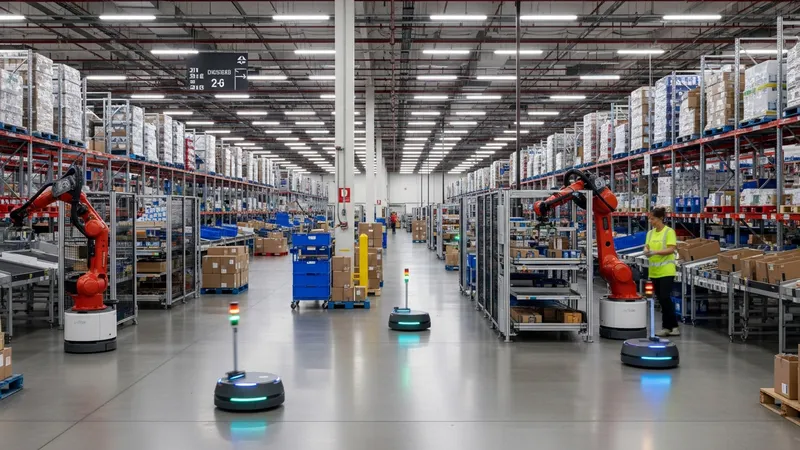
Facility layout and SKU characteristics commonly influence which robot types are selected. High-density shelving and carton-based assortments may favor mobile shelf-carrying systems, while large-volume pallet movements often remain with forklifts or pallet AGVs. In U.S. distribution centers handling fast-moving e-commerce SKUs, robotic pickers may be paired with human “chunk pickers” to manage variability in item size, fragility, or packaging. These combinations are used to balance throughput and handling precision.
Interoperability and communication are typical considerations when operating mixed fleets. Robots usually connect to fleet management or WMS interfaces that assign tasks, monitor locations, and enforce safety zones. In U.S. operations, common protocols and API integrations can enable robots from different vendors to operate in the same facility, though integration complexity may vary. Planners often evaluate network reliability, software version compatibility, and the ability to simulate workflows before committing to mixed deployments.
Maintenance models for different robot classes may differ in frequency and scope. AMRs with many moving parts and lidar or camera systems typically require routine sensor calibration and battery management. AGVs may focus maintenance on guidance systems and drive components. Robotic pickers need periodic end-effector inspection and vision system checks. U.S. facilities often formalize preventive maintenance schedules and spare-part inventories to preserve uptime and predictable performance across varied robot types.