
Automation In Business: Key Processes And Applications Explained

Types of Automation Technologies Used in South Korean Businesses
Various automation technologies serve different aspects of business processes in South Korea. Robotic Process Automation (RPA) manages administrative and data entry tasks, often interfacing with legacy systems, and is becoming increasingly accessible due to software advances. These systems typically range from simple rule-based automations to more complex cognitive bots capable of handling unstructured data.
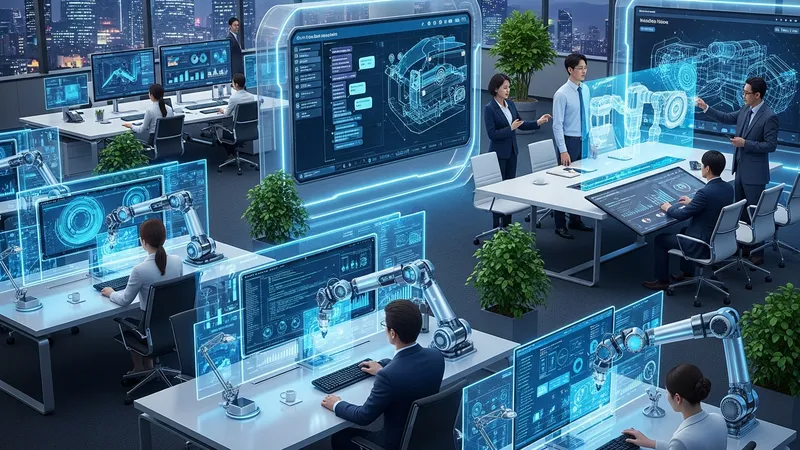
Artificial Intelligence (AI) applications extend beyond analytics, including natural language processing and machine vision, which may assist in customer service or quality control processes. South Korean companies frequently customize AI tools to match specific workflow demands, with solutions often developed in collaboration with domestic tech providers or research institutions.
Industrial robots serve physically intensive tasks in manufacturing and are often supplemented by automated guided vehicles (AGVs) for intra-factory logistics. The widespread use of robotics in South Korea’s manufacturing sectors reflects the country’s focus on advancing smart factory initiatives under government-led programs. These technologies may be integrated with Internet of Things (IoT) devices to improve data collection and process synchronization.
Software platforms for enterprise resource planning (ERP) and customer relationship management (CRM) increasingly incorporate automation features, including automated notifications, scheduling, and realtime reporting. Such platforms often form the backbone for scaling automation across multiple departments and may be offered by South Korean IT service firms with localized support.