
AI Scheduling For Plumbing Businesses: How Automation Supports Job Booking And Dispatch

Integration with field service and communication systems for booking and dispatch
Effective scheduling systems commonly integrate with broader field service platforms that handle work orders, parts inventory, invoicing, and customer records. Integration enables a single source of truth for service history and parts usage, which in turn informs scheduling decisions—if a job requires a rare spare part, the scheduler can prevent assignments to technicians lacking that part. Two-way integrations with CRM modules allow appointment status updates to propagate to billing workflows, reducing manual reconciliation between systems.
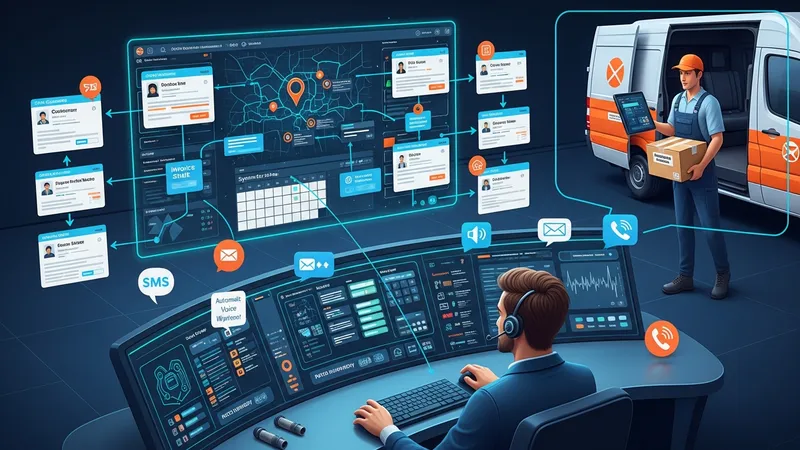
Communication channels are central to dispatch coordination: SMS or email notifications, automated voice updates, and in-app messaging keep customers and technicians informed about timing and changes. Some setups include telephony integrations for incoming calls to create tentative appointments that feed into the scheduling workflow. Reliable synchronization between calendar systems and dispatch boards reduces double-bookings and helps maintain accurate availability windows for technicians.
APIs and webhooks facilitate real-time updates between dispatch modules and third-party tools such as mapping services or parts suppliers. For example, when a technician logs a part shortage, a webhook can notify inventory systems and adjust downstream scheduling to account for expected delays. Security and rate-limiting considerations are typical when designing integrations so that sensitive customer or location data is transmitted only as needed and with appropriate authentication.
Operational teams often document integration touchpoints and failure modes so dispatchers know fallback procedures when external services (e.g., mapping or SMS providers) are degraded. Maintaining clear logging and alerting pathways for integration failures helps keep customers informed and supports structured troubleshooting without relying solely on manual processes.