
AI Medical Coding Platforms: Understanding How Automation Supports Clinical Documentation

Integration, workflow, and human collaboration in United States clinical documentation workflows
Practical integration with electronic health records (EHRs) and revenue-cycle systems is a central implementation challenge in U.S. settings. Many hospitals and ambulatory groups use EHRs from vendors such as Epic or Oracle Cerner; integration points may include direct API connections, HL7 interfaces, or middleware. The choice of integration method can influence latency of suggestions, the location where coders review recommendations, and how documentation edits flow back into the record. Technical compatibility and interface testing are typical early steps in U.S. deployments.
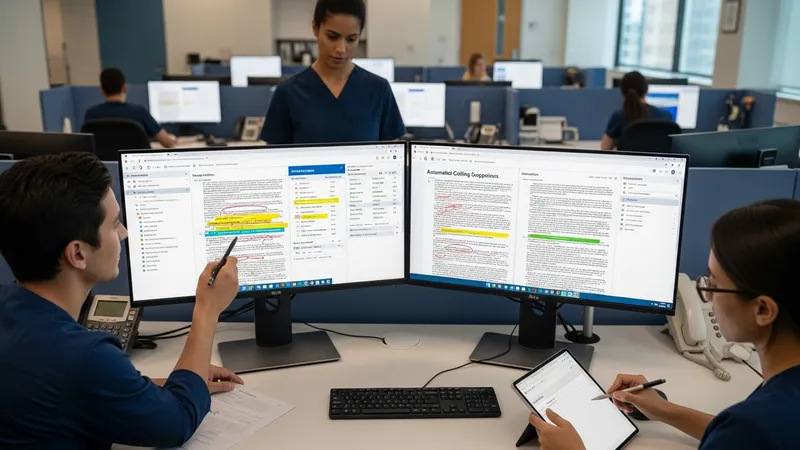
Human collaboration models generally adopt a human-in-the-loop approach where certified coders, clinical documentation improvement specialists, or clinicians validate and finalize codes. Worklists, confidence scoring, and user interfaces that highlight source text are commonly used to support efficient review. In many U.S. organizations, these collaboration features help maintain coder oversight and institutional control over final coding decisions while allowing automation to assist with routine or high-volume mapping tasks.
Change management and training are important operational elements. Staff may need orientation to new user interfaces, to interpretation of confidence indicators, and to procedures for challenging or correcting automated suggestions. U.S. facilities often pilot systems in selected departments to gather feedback and refine workflows. Metrics such as query rates for clarification of documentation, coder throughput, and coding accuracy sampling are commonly tracked to assess impacts and guide iterative improvements without framing automation as a substitute for professional judgment.
Audit trails and reporting capabilities can support governance and continuous improvement. Systems that log suggestion provenance, reviewer actions, and timestamps create records useful for internal quality assurance and for responding to external inquiries. Reporting that summarizes types of suggestion edits, frequent documentation gaps, or specialty-specific patterns may inform targeted education for clinicians and coders. Such analytical outputs are typically used as informational inputs for process refinement rather than as definitive performance guarantees.