
AI In Gaming: How Artificial Intelligence Drives Game Design Innovation

AI Techniques Used in Game Design and Development
Game developers often utilize a range of AI techniques to deliver intelligent game elements. Among common methods, finite state machines (FSMs) provide a structured way to define NPC states and transitions, which remain foundational in many projects. More advanced approaches include behavior trees, which allow for hierarchical decision processes and more nuanced character actions. Additionally, machine learning techniques such as reinforcement learning may be employed for NPCs that learn from environment interactions over time.
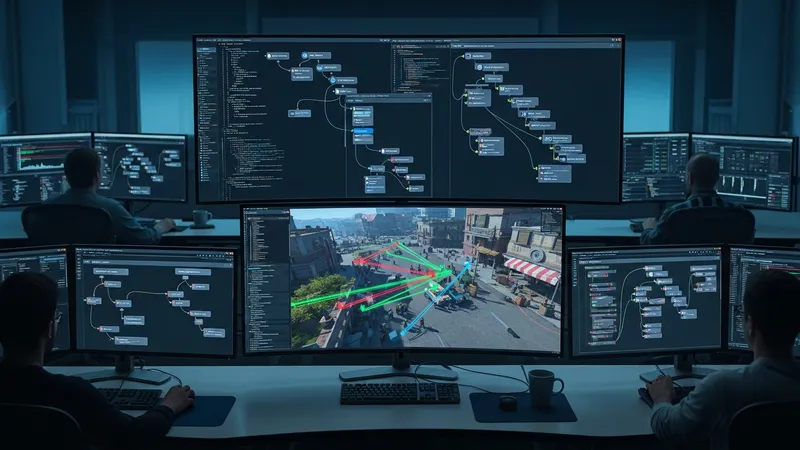
Pathfinding algorithms are critical AI components primarily used to navigate game worlds efficiently. The A* algorithm is frequently implemented due to its balance of computational efficiency and path optimality. In larger United States-based game studios, pathfinding is often integrated with navigation meshes that approximate walkable terrains, improving reliability across complex environments. These systems are continuously refined to handle dynamic obstacles and changing level layouts.
Natural language processing (NLP) algorithms can be applied for dynamically generating or interpreting in-game dialogue. While more experimental, some titles incorporate models that create contextually relevant responses to player input, facilitating deeper interaction with NPCs. This area is less widespread but may grow as language models develop further, potentially enhancing storytelling components within games.
The use of procedural content generation (PCG) methods involves AI algorithms that automatically create game assets such as levels, items, or textures. PCG can reduce manual workload and provide variability. It typically uses rule-based systems, noise functions like Perlin noise, or generative adversarial networks (GANs) to produce content. Within the United States, some indie and large studios experiment with these techniques to extend replayability and player engagement, although integration varies significantly by project type.