
AI In Gaming: How Artificial Intelligence Drives Game Design Innovation

Artificial intelligence (AI) in gaming refers to the application of computational techniques that enable games to simulate intelligent behaviors and interactions. This includes the creation of responsive non-player characters (NPCs), procedural content generation, and adaptive systems that adjust gameplay based on player actions. AI integration has been a progressing area within game development as it contributes to creating more dynamic and engaging experiences. In particular, AI systems might interpret player behavior and modify in-game challenges or narratives to align with the player’s style and skill level without manual adjustments by developers.
In the context of AI implementations, various algorithms and machine learning methods are used to inform decision-making within games. These technologies are often embedded in game engines or auxiliary software frameworks and can influence areas such as pathfinding, decision trees, and environmental changes. Developers may employ AI to introduce variability in gameplay, avoiding repetitive scenarios and enhancing realism. The inclusion of AI-driven mechanics can also affect the game design philosophy by shifting some aspects of experience customization from fixed scripting to emergent properties that arise from player interactions.
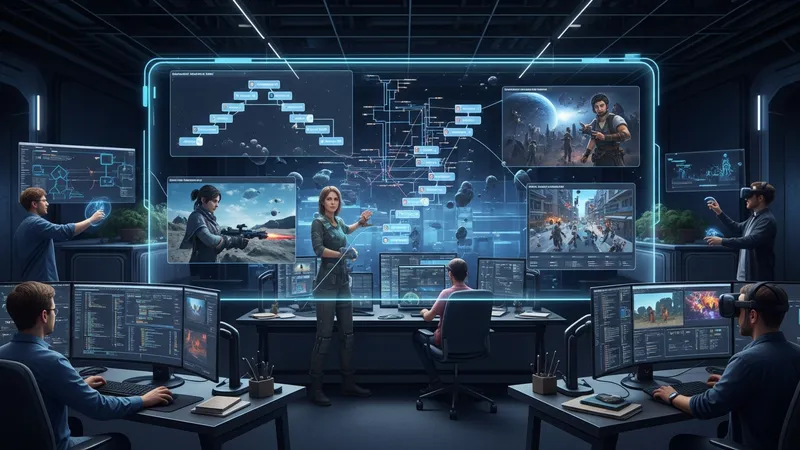
- Unity ML-Agents: A toolkit integrated within the Unity game engine enabling developers to use machine learning models for NPC behaviors and environment interactions; typical usage costs may vary depending on Unity subscription plans starting around $40 per month.
- Unreal Engine AI Features: Provides built-in AI tools like behavior trees and environment querying systems used for NPCs and gameplay mechanics; Unreal Engine operates on a royalty-based pricing model for commercial games.
- OpenAI GPT-3 API: Though not game-specific, it can be implemented for generating dynamic dialogue and story elements within games; pricing ranges typically start from a pay-as-you-go model based on usage.
AI’s role in creating smarter NPCs often involves automating decision-making processes that were historically rule-based. Instead of predictable patterns, NPCs can learn from interactions or state changes to provide varied reactions. This variability may increase immersion by simulating human-like unpredictability. It can also support more complex multiplayer settings where NPCs need to interact dynamically with several human players simultaneously without manual scripting for every possible scenario.
Adaptive difficulty is another application of AI that can adjust game challenge based on ongoing player performance. Systems may monitor metrics such as success rates, time spent on levels, or frequency of failures, and tweak parameters accordingly. This aims to maintain balanced gameplay that neither frustrates nor bores players. Although not all games employ such systems, this approach may become more common as machine learning tools become more accessible to developers and allow real-time computation within game environments.
Dynamic environment generation powered by AI may include procedurally creating map layouts, placing objects, or altering game states based on player behavior or random seeds. This method can offer fresh content with each playthrough and reduce the resource requirements for manual content creation. Dynamic changes might also tie into narrative progression or player choices, resulting in games that feel tailored yet non-repetitive. However, designing such systems requires careful balancing to avoid unintended gameplay issues or loss of thematic consistency.
Incorporating AI also expands analytical capabilities within game development workflows. Data collected from player interactions can be processed using AI to identify patterns, optimize level design, or detect potential issues. This feedback may influence future updates or new titles. Although these practices are in use by some studios in the United States, their extent varies depending on development resources and project scope.
Overall, AI integration within game design involves numerous methods and technologies that contribute to more responsive, engaging, and varied player experiences. These applications span NPC behavior, difficulty scaling, procedural content generation, and data-driven development processes. The next sections examine practical components and considerations in more detail.