
AI Bookkeeping Automation: How Software Transforms SMB Financial Management

Integration and Compatibility in AI Bookkeeping Automation Solutions
Integration with other financial systems and accounts is a defining aspect of AI bookkeeping automation platforms in the United States. Most leading solutions include direct bank feeds, enabling real-time import of transactions from major U.S. banks and credit unions. Compatibility with payment processors, payroll systems, and inventory management tools is often offered, allowing SMBs to centralize their financial data in a single platform.
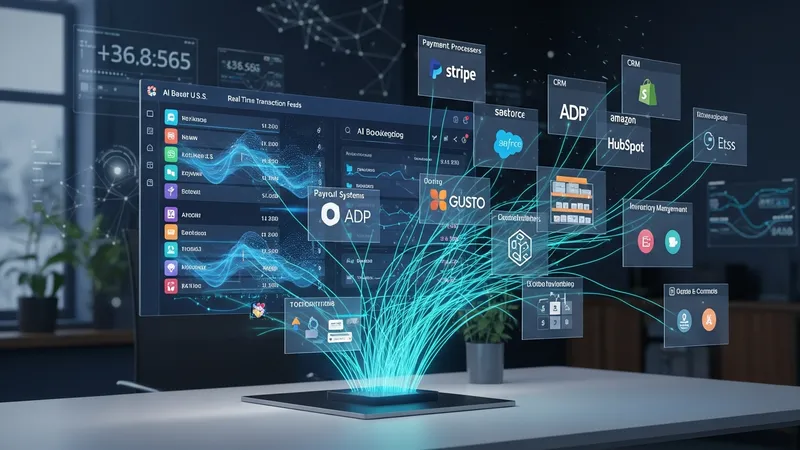
APIs and prebuilt connectors are typically available for businesses requiring more custom integrations. An SMB may, for example, connect its bookkeeping software to a CRM or e-commerce system, enabling sales and expense records to flow automatically into accounting workflows. Broad compatibility may be particularly valuable for businesses operating with non-standard payment methods or specialized software stacks.
Third-party app marketplaces managed by software providers such as Intuit and Xero allow further extension of core bookkeeping capabilities. Authorized apps may automate document management, receipt capture, or time tracking, adding flexibility to the base AI-powered system. Many of these apps undergo regular security and compliance reviews as part of platform policies in the United States.
Successful integration projects often involve a collaborative approach between software providers, internal IT teams, and external accountants. During implementation, data mapping and migration steps are managed to ensure continuation of historical records and minimize disruption to business operations. SMBs typically evaluate integration options based on compatibility with their existing systems and anticipated business growth.