
Advanced Diagnostics: Understanding Modern Testing Technologies And Applications

Advanced Diagnostics: Computational Pipelines and Data Management
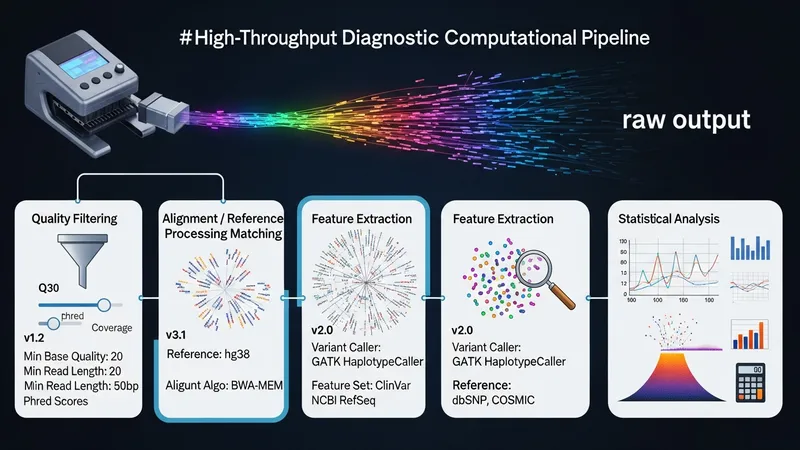
Computational pipelines convert raw instrument outputs into interpretable information through sequential processing steps. Typical steps may include quality filtering, alignment or reference matching, feature extraction, statistical analysis, and generation of summary reports. Pipelines are commonly implemented with modular components so individual tools can be swapped as methods mature. Documentation of pipeline versions, parameter settings, and reference datasets is typically used to support reproducibility and auditability of results.
Data storage and archival strategies are relevant since advanced diagnostics can produce large raw datasets. Strategies may include tiered storage, where frequently accessed processed results are kept on faster media and raw datasets are archived on lower-cost storage. Compression and standardized file formats can reduce storage demands, but they may introduce trade-offs related to access time and compatibility. Considerations around metadata schemas, unique identifiers, and secure access controls are often part of comprehensive data management plans.
Computational resource planning often accounts for peak processing loads and the need for parallelization. High-performance computing, cloud-based resources, or on-premises clusters may be used depending on institutional preferences, data governance, and cost considerations. Pipelines that rely on external reference databases may include update schedules and checksums to ensure consistent reference versions. Monitoring resource usage and pipeline runtime can inform optimization and capacity planning efforts.
Data governance, privacy, and access control are central when diagnostic workflows handle sensitive information. Policies that specify roles, permissions, and retention periods may be implemented to limit unnecessary exposure of raw data. Encryption in transit and at rest and audit logging of access events are commonly recommended as part of a layered security approach. These governance measures often interact with institutional policies and applicable laws—careful documentation helps align technical practices with organizational requirements.