
Premium Flight Options: Key Differences Between Economy, Premium Economy, And Business

Commercial airlines typically divide passenger cabins into several tiers that correspond to differences in seating, onboard services, and fare conditions. These tiers commonly include a baseline seating category with standard space and service, an intermediate cabin that provides incrementally more legroom and amenities, and a higher-tier cabin designed for extended comfort and work-friendly layouts. The distinctions between these tiers are structured around physical seat features, the scope of in-flight services, and the associated fare rules that affect flexibility and inclusions.
The separation among cabin levels often reflects airline product strategy and aircraft configuration. Differences may appear in seat pitch and width, recline and privacy, meal service timing and quality, entertainment systems, and access to airport facilities such as lounges or priority lanes. Ancillary elements like baggage allowances, change and refund policies, and frequent‑flyer accrual rates also vary by cabin and can influence overall travel experience and perceived value.
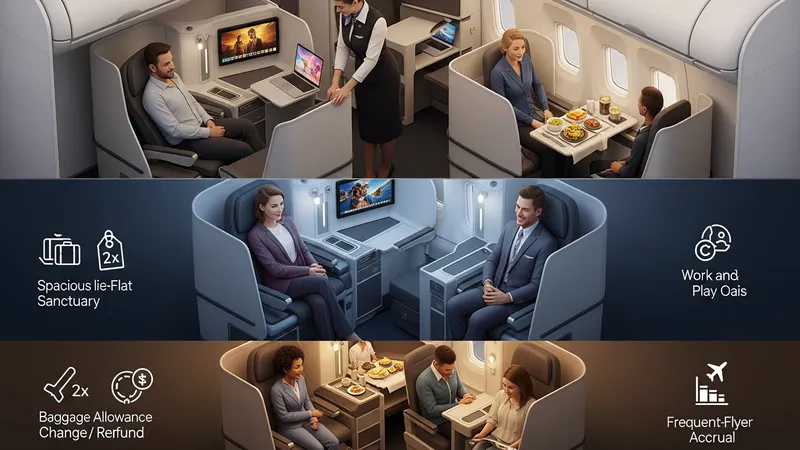
- Economy class — Standard passenger seating intended for cost-conscious travel; typically characterized by narrower seats, tighter pitch, and basic meal and entertainment options. Cabin layout and service level may vary by aircraft and carrier.
- Premium economy — An intermediate cabin that often provides increased seat pitch, wider seats or adjustable leg rests, upgraded meal service, and moderate fare increases relative to economy. It may be offered on wide‑body and select narrow‑body aircraft.
- Business class — A higher-tier cabin with larger seats that frequently convert to lie-flat or angled-flat beds on long-haul routes, enhanced dining and beverage service, and additional airport benefits such as priority boarding and lounge access.
Comparing physical seat measurements is a common way to understand cabin differences. Seat pitch in standard economy may typically range from about 28–32 inches, while premium economy seats can often add several inches of legroom and more recline. Business class seats may provide substantially greater personal space and privacy, including configurations that allow full recline into sleeping positions on many long-haul aircraft. Aircraft type and airline product choices strongly influence exact dimensions and layouts.
Service scope is another axis of variation. Economy service commonly includes basic meal and beverage offerings, with larger carriers sometimes selling upgrades for extra comforts. Premium economy may provide enhanced meal presentation, wider selection of beverages, and amenity kits on longer sectors. Business class service often includes multi-course meals, expanded beverage lists, and dedicated cabin crew attention. These differences may affect passenger experience more than absolute comfort metrics alone.
Fare rules and inclusions typically differ across cabins and can shape travel planning. Economy fares often have more restrictive change and refund policies and may have additional fees for seat selection and checked baggage. Premium economy fares may include one or more checked bags and more flexible change terms, while business class fares commonly include higher baggage allowances and more lenient rebooking or refund options. Loyalty program earn rates may also vary by cabin class and fare family.
Onboard amenities and technology are additional differentiators. Economy seats may offer personal screens or shared displays depending on aircraft age; premium economy generally provides larger screens and improved headphones or power outlets; business class often incorporates larger individual monitors, direct power and data ports, and enhanced noise‑reducing headsets. Cabin lighting, privacy partitions, and storage solutions also tend to improve progressively from economy to business.
In summary, airline cabin tiers reflect a combination of seat design, service level, fare conditions, and airport benefits that together influence passenger experience. The next sections examine practical components and considerations in more detail.