
Premium Flight Options: Key Differences Between Economy, Premium Economy, And Business

Seating, Space, and Cabin Layouts related to Premium Flight Options: Key Differences Between Economy, Premium Economy, and Business
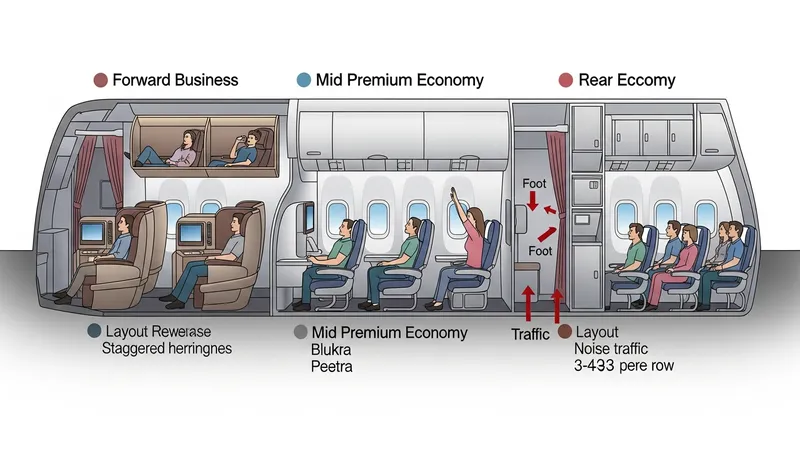
Seat geometry and cabin layout shape perceived comfort across different cabin tiers. Economy cabins are often arranged with higher seat counts per row to maximize capacity, while premium economy typically reduces seats per row or increases pitch to provide more personal space. Business cabins frequently use reverse‑herringbone, staggered, or forward‑facing suites to enhance privacy and allow flat‑bed positions on long routes. Aircraft types—single‑aisle versus wide‑body—affect whether a carrier can economically offer an intermediate cabin at all.
Configuration decisions also influence proximity to galleys, lavatories, and high‑traffic areas, which can affect noise and convenience. Premium economy sections are commonly located between economy and business cabins to balance service flows, whereas business cabins are usually forward for quicker boarding and disembarkation. On long‑haul aircraft, bulkhead rows in premium economy may offer additional legroom but sometimes limit under‑seat storage, an operational trade‑off to consider.
Manufacturers and retrofit options have expanded seating types available to airlines. Some premium economy seats add adjustable leg rests, deeper recline, and improved cushioning, while business seats may incorporate direct aisle access for every passenger on certain wide‑body models. The choice of specific seat modules and cabin density frequently depends on route demand and network planning, so similar seat classes can vary noticeably between carriers.
As a practical consideration, passengers often weigh seat measurements such as pitch, width, and recline against the duration of a flight. For medium‑haul journeys, the incremental space of premium economy may be perceived as sufficient, while for overnight long‑haul sectors the lie‑flat capabilities of business cabins may be more relevant. These preferences can guide which cabin feature differences are most meaningful for a given itinerary.