
Lead Generation Services: Understanding Core Strategies And Processes

Lead generation services describe a set of activities and systems used to identify potential customers, gather their contact information, and deliver that prospect data into sales and marketing workflows. These services typically combine audience targeting, data capture mechanisms (forms, calls, chats), and initial qualification steps so that businesses can follow up through email, phone, or automated nurturing. Providers may operate campaign infrastructure, manage creative assets, or supply verified contact lists; the common objective is to create an organized stream of prospects that aligns with a client’s sales process.
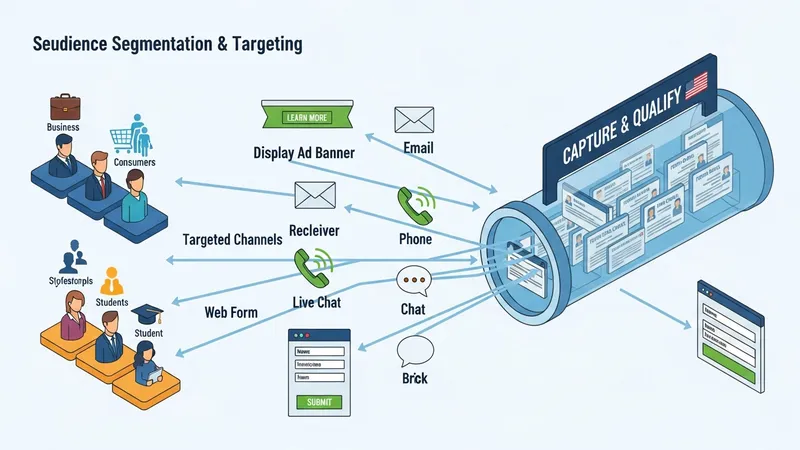
Operationally, lead generation services often involve a sequence: define target audience segments, deploy channels that reach those segments, capture responses, apply qualification rules, and integrate results into a customer relationship management (CRM) system. In many United States contexts this sequence also includes consent management and recordkeeping for regulatory purposes. The services can be delivered by in-house teams, specialist agencies, or software platforms that automate parts of the workflow, and they may emphasize different stages such as prospect discovery, short-form capture, or lead enrichment.
- Google Lead Form Extensions — short web-based forms attached to search and display ads for immediate response capture.
- Meta (Facebook/Instagram) Lead Ads — in-platform lead collection forms designed for mobile-first social audiences.
- LinkedIn Lead Gen Forms — profile-based capture used commonly for B2B prospecting and professional targeting.
Channels and form design are central to service selection and setup. Search ads with embedded lead forms may produce intent-driven contacts, while social lead ads frequently prioritize convenience and mobile completion. Landing pages and gated content remain common capture points for inbound programs, and telephone or chat capture is still used for higher-touch inquiries. Each channel may present trade-offs in completion rate, information depth, and downstream qualification needs; practitioners often test combinations to match lead attributes with intended follow-up resources.
Data quality and enrichment are distinct components of many lead services. Raw contact captures can be supplemented with firmographic, demographic, or behavioral attributes from third-party data sources or internal matching. Enrichment may improve routing and scoring but can also introduce inaccuracies if matching rules are loose. In United States operations, enrichment workflows commonly include verification steps (email or phone validation) and timestamped consent records to support compliance reviews and to help sales teams prioritize outreach based on available context.
Integration with CRM and automation platforms is a frequent operational requirement. Lead delivery commonly uses APIs, webhook triggers, or file-based transfer into systems such as Salesforce or HubSpot, where assignment rules and nurturing sequences can be applied. Timeliness of delivery often affects conversion: leads delivered within minutes may convert more readily than those routed hours later. Integration design typically also accounts for deduplication logic and status updates that allow marketing teams to close the loop on lead outcomes.
Measurement and commercial models vary across United States providers. Pricing approaches may include flat fees, pay-per-lead, or performance-tiered arrangements; what constitutes a qualified lead is typically defined in a Service Level Agreement (SLA) or contract. Cost per lead (CPL) in U.S. markets may often range widely depending on vertical and channel—from lower amounts for consumer inquiries to substantially higher ranges for specialized B2B leads—so buyers commonly monitor conversion rates, downstream sales outcomes, and lead aging to assess relative value rather than relying on headline unit prices alone.
Lead generation services also intersect with recordkeeping and consent practices in the United States. Service providers often maintain logs of opt-ins, form submissions, and phone recordings where lawful, and they may store metadata used for audits or attribution. Because procurement teams and legal reviewers may evaluate vendor processes, many organizations ask for examples of data-handling flows and retention windows. The next sections examine practical components and considerations in more detail.