
Autonomous Warehouse Robots: How Robotics Is Transforming Storage And Fulfillment Operations

Autonomous warehouse robots are programmable machines designed to move goods, manage inventory, and assist with order handling inside storage and distribution facilities. These systems often combine onboard sensors, navigation software, and task orchestration to operate without continuous direct human control, enabling coordinated movement through aisles, transfer of totes or pallets, and interaction with warehouse management systems used in United States operations.
In practice, these robots may perform discrete tasks such as transporting picked items to packing stations, repositioning inventory for faster access, or supporting replenishment workflows. Integration typically involves fleet management software, mapping of facility layouts, and interfaces with existing inventory databases to align robotic actions with order priorities and safety requirements common in U.S. facilities.
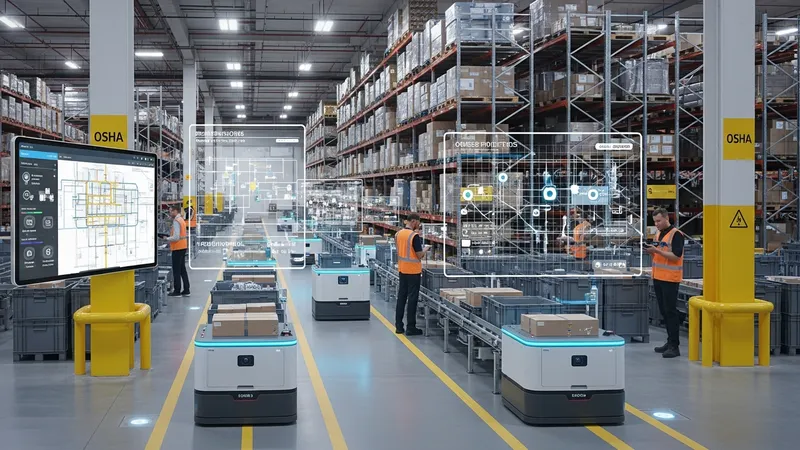
- Autonomous Mobile Robots (AMRs): mobile platforms that navigate using onboard sensors and floor maps to carry totes or shelves across warehouse floors; examples are used by major U.S. distribution centers and may operate with fleet management software.
- Automated Guided Vehicles (AGVs): guided units that follow fixed routes or markers for repetitive transport tasks; AGVs are often applied in high-throughput corridors inside U.S. manufacturing and distribution hubs.
- Robotic Picking and Sorting Systems: stationary or mobile manipulators that handle individual items for order fulfillment, often paired with vision systems for item recognition; these systems are increasingly used in U.S. e-commerce facilities.
Comparative roles between AMRs, AGVs, and robotic picking systems often reflect trade-offs in flexibility and infrastructure. AMRs frequently need less fixed floor guidance and can adapt routes dynamically, while AGVs may require floor magnets, markers, or dedicated pathways. Robotic pickers tend to focus on item-level handling and may be integrated at packing lanes or picking stations to reduce repetitive manual tasks. U.S. facilities may choose combinations of these types based on throughput patterns and facility layout.
Integration with warehouse management and enterprise resource planning systems typically influences implementation scope and operational impact. Fleet orchestration software can coordinate dozens to hundreds of units, schedule charging cycles, and avoid congestion. When connected to inventory and order systems commonly used in the United States, robots can receive tasking that reflects real-time demand, which may change warehouse workflows and shift human roles toward supervision, quality control, and exception handling.
Operational metrics commonly monitored after deployment include throughput per hour, order-picking cycles, travel distance reduction, and uptime. In U.S. contexts, facilities often compare pre- and post-deployment workflows using these metrics to assess whether robotics rebalances labor allocation or alters footprint needs. Measurement frameworks tend to account for seasonal fluctuations and maintenance schedules to avoid attributing short-term variability to long-term effects.
Safety, standards, and workforce considerations are central to deployments in the United States. Facilities typically consult federal and industry guidance—such as Occupational Safety and Health Administration (OSHA) considerations and standards from industry groups—to define safe interaction zones, training protocols, and emergency stop procedures. These safety elements can shape layout decisions and the placement of human workstations relative to robotic traffic paths.
In summary, autonomous machines for warehouses combine navigation, material handling, and software coordination to change how storage and fulfillment tasks are executed in United States facilities. Choices among mobile platforms, guided vehicles, and picking systems depend on facility layout, throughput needs, and integration with existing systems. The next sections examine practical components and considerations in more detail.