
Drug And Alcohol Rehab Centers: Understanding Treatment Options And Care Levels

Drug and alcohol rehabilitation centers address patterns of problematic substance use through organized programs that match levels of clinical care to individual needs. These centers commonly categorize services by intensity and duration, ranging from medically supervised detoxification to structured residential programs and less-intensive outpatient supports. Facilities may operate within hospitals, standalone treatment centers, or community clinics, and many refer to nationally recognized frameworks such as the American Society of Addiction Medicine (ASAM) criteria when determining appropriate care levels.
Programs at these centers typically include clinical assessment, behavioral therapies, and coordination with primary care or mental health providers as needed. Teams often involve clinicians, counselors, nursing staff, and peer-support specialists who document progress and adjust care plans over time. In the United States, regulatory and payor environments — including state Medicaid policies and private insurance provisions — shape which services are available and how they are delivered, so models can vary geographically and by facility type.
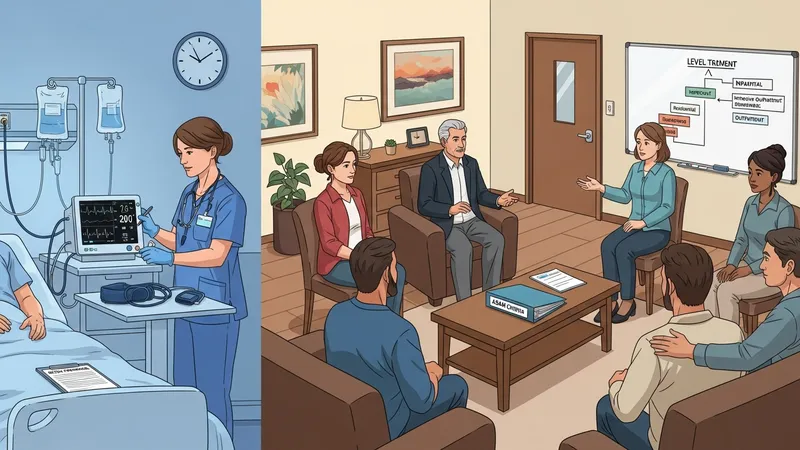
- Inpatient or residential programs: Structured, 24-hour care in a non-hospital setting that typically focuses on stabilization, therapy, and transition planning.
- Medication-assisted treatment (MAT): Use of FDA-approved medications alongside counseling for opioid or alcohol use disorders, often provided in clinics or outpatient settings.
- Outpatient treatment and recovery support: Time-limited or ongoing counseling, group therapy, and peer support that may allow participants to live at home while attending sessions.
Levels of care are frequently defined by intensity and service mix rather than uniform labels, and a person’s placement often follows a clinical assessment. The ASAM criteria is one U.S.-based system that categorizes needs across dimensions such as withdrawal potential, medical conditions, and readiness to change; many U.S. programs reference it when determining whether a person may need outpatient care, residential treatment, partial hospitalization, or medically managed inpatient services. This approach aims to match resources to clinical indicators and social supports.
Detoxification or medically supervised withdrawal services may be a first step for some individuals who require management of acute physiological symptoms. Such services often occur in specialized units or hospitals and may be short-term. Clinical teams typically assess withdrawal risk and may coordinate medication and monitoring when appropriate. Detox alone is usually framed as an initial stabilization phase rather than a complete treatment plan, and transition to psychosocial or ongoing care is commonly part of discharge planning.
Behavioral therapies are core components across care levels and can include individual cognitive-behavioral therapy (CBT), motivational interviewing (MI), family therapy, and group modalities. In the U.S., evidence-informed therapies are often integrated with medication when clinically indicated. Programs may vary in how routinely they use particular therapies and in staff training; consumers and referring clinicians may review program descriptions and clinical credentials to understand which therapeutic approaches are emphasized.
Care coordination and discharge planning often aim to link people to continuing supports such as outpatient counseling, peer recovery groups, and community resources. In the United States, partnerships with primary care, mental health services, and social services can influence continuity of care. Confidentiality rules and documentation standards are part of program operations, and facilities commonly have protocols for referrals, follow-up appointments, and communication across providers to support ongoing engagement.
In summary, centers that treat drug and alcohol problems operate across a spectrum of care levels and service types intended to address stabilization, clinical therapy, and long-term recovery support. Programs may use standardized assessment frameworks to guide placement and often combine behavioral therapies with medical management when indicated. The next sections examine practical components and considerations in more detail.