
Private Business Loans: How Small Businesses Can Access Alternative Financing

Small businesses in the United States may seek financing from non-bank lenders when traditional bank credit is unavailable or unsuitable. These alternative sources include online lenders, private credit firms, invoice financiers, and merchant cash advance providers. Such lenders typically evaluate cash flow, invoices, or receivables rather than relying solely on credit history, and they may offer a range of term lengths, repayment structures, and underwriting approaches that differ from conventional bank loans.
Alternative lending options often vary in speed, documentation requirements, and cost. Some platforms provide short-term term loans or revolving lines of credit with automated application processes, while private credit funds may offer larger, bespoke facilities that involve longer negotiations. In the United States, small business owners encounter distinct regulatory, tax, and state-law considerations when assessing these private financing channels.
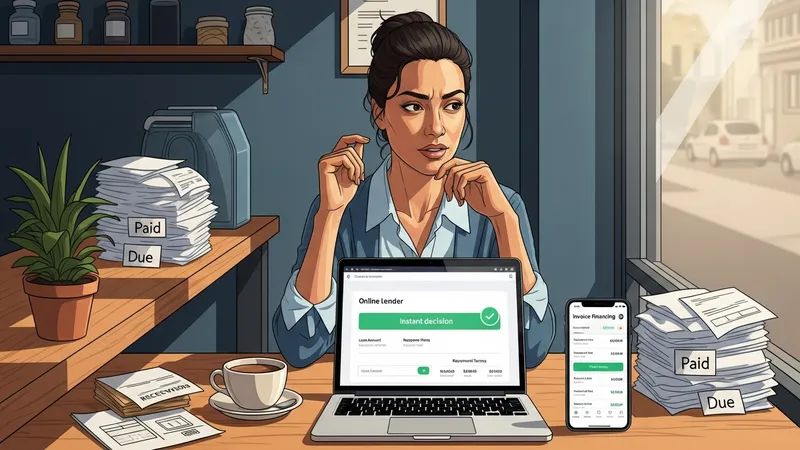
- OnDeck — an online lender offering short-term business loans and lines of credit commonly used by small firms; typical loan sizes may range from about $5,000 to $250,000, depending on product and underwriting.
- BlueVine — provides small business lines of credit and invoice factoring in the U.S.; credit lines often start in the low thousands and may scale with receivables and business history.
- Fundbox — focuses on invoice financing and revolving credit tied to accounts receivable; advances can often cover individual invoices or provide a short-term credit facility.
Different private finance providers fill different needs. Online term lenders and credit lines may suit businesses needing rapid access to working capital and shorter repayment windows, while invoice financing converts outstanding receivables into immediate cash against a fee. Private credit funds and specialty finance firms may underwrite larger, customized credit arrangements that often require more documentation and negotiation. These distinctions matter for cash flow planning because repayment cadence and advance costs vary by product type.
Cost transparency and how pricing is expressed can differ across provider types. Online lenders commonly present annual percentage rates (APR) or fixed fee schedules, while invoice financing and merchant cash advances often use factor rates or discount fees that translate differently to APR equivalents. Small business borrowers in the U.S. should expect pricing to vary with credit profile, industry, term length, and collateral or account-receivable quality rather than assuming uniform rates across providers.
Eligibility and underwriting standards also diverge. Many online platforms accept shorter operating histories and rely on recent bank deposits, point-of-sale records, or invoice data for underwriting. In contrast, private credit funds and institutional lenders may require multi-year financial statements, corporate governance reviews, and tighter covenants. The choice between speed and depth of underwriting often reflects the lender type and the loan’s size and complexity.
Risk and compliance considerations accompany alternative financing. Some products can affect cash flow predictability because of daily or percentage-based repayment structures tied to sales. Additionally, state-level usury rules, contract law, and federal disclosures can influence loan terms and enforceability in the United States. Borrowers commonly weigh both immediate liquidity needs and longer-term cash flow implications when comparing private lending options. The next sections examine practical components and considerations in more detail.