
Smart Technology For Small Businesses: How Automation Tools May Improve Efficiency

Small enterprises can integrate networked software and devices to automate routine administrative and operational tasks. This concept refers to using digital systems to handle scheduling, invoicing, customer messages, and stock records with reduced manual entry. In a practical sense, automation links data flows between software services so that actions such as issuing an invoice after a sale, confirming an appointment, or adjusting inventory levels can follow predefined rules rather than requiring repeated human steps.
Automation systems often combine cloud-hosted applications, APIs, and local devices to streamline daily workflows. For small businesses in France, these systems may connect with local payment providers, French-language accounting modules, and services that comply with national reporting formats. The intent is to improve task consistency, reduce time spent on routine tasks, and provide clearer traceability of operations; results typically depend on how tools are configured and how teams adapt processes.
- Sage Business Cloud (Sage) — accounting and invoicing modules commonly used by French small businesses to automate bookkeeping entries and VAT reporting workflows in formats compatible with French accounting practices.
- Doodle (scheduling) — online scheduling that can automate meeting coordination and calendar updates for teams and clients, with French-language interfaces and local time-zone handling.
- PayPlug (payments) — French payment gateway that may automate payment capture, reconciliation, and notifications for e-commerce and invoicing workflows.
- Zendesk (customer support) — customer support platform with automation features for ticket routing, autoresponders, and basic workflow rules, often adapted for French-language support teams.
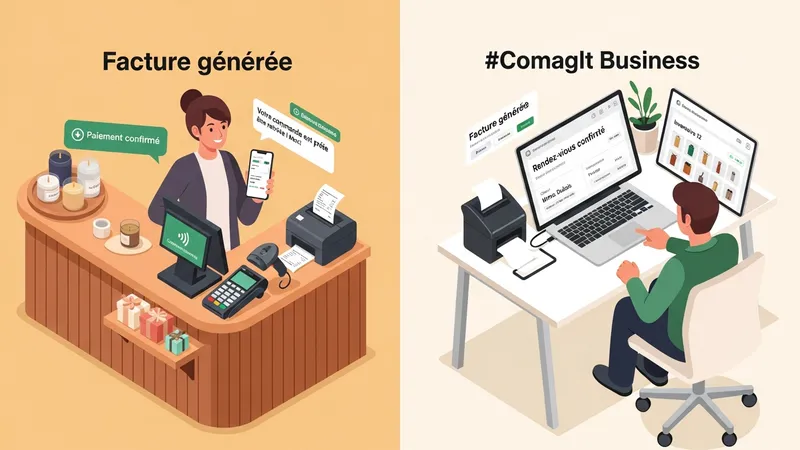
French small businesses adopting these tools often start with one or two automation points, such as automatic invoicing after order confirmation or calendar-based appointment reminders. Integration patterns may use connectors or middleware to pass data among services; for example, a point-of-sale event can trigger invoice generation and stock update. In France, compatibility with local accounting formats and VAT rules is a practical consideration, as is the ability to operate in French and integrate with banks and payment services that handle euros and domestic reporting.
Comparisons between approaches typically focus on the degree of customisation, the availability of French-language support, and how easily a tool links to other services. Some vendors provide prebuilt connectors for commonly used French banks or accounting packages, while others require configuration or third-party integrators. Small teams often weigh the administrative time saved versus the time spent setting up automated rules; the net effect on efficiency will often depend on initial configuration and ongoing maintenance.
Automation can also influence customer-facing experiences through more consistent response times, automated confirmations, and clearer billing documents. In France, businesses may choose solutions that produce invoices with legally required information and formats to ease accounting and tax filing. Similarly, scheduling automation can reduce no-shows by sending reminders in French and integrating with popular calendar applications used by local clients and suppliers.
Another dimension is data centralisation: automation may consolidate customer records, inventory levels, and transaction histories into a single view, which can simplify reporting and forecasting. For small businesses in France, ensuring that consolidated data aligns with local reporting expectations and that backups follow French data handling practices are relevant considerations. This centralisation often makes it easier to identify bottlenecks or repetitive manual tasks that could be further automated.
In summary, the concept describes how networked software and services may reduce repetitive manual tasks for small enterprises by automating invoicing, scheduling, payments, and support workflows. Practical effects depend on tool choice, local compatibility with French accounting and payment systems, and how staff integrate automation into daily processes. The next sections examine practical components and considerations in more detail.