
Pipeline Girth Weld Testing: Methods And Technologies Explained

Pipeline girth weld testing refers to the systematic examination of circumferential welds that join sections of pipelines. This process is designed to assess the structural adequacy and detect possible defects to help maintain the integrity of pipeline systems. Inspection is conducted using recognized technical methods and detection technologies that aim to identify imperfections such as cracks, lack of fusion, porosity, or inclusions that could compromise safety or performance over time.
During both new pipeline construction and ongoing maintenance, dedicated girth weld testing is frequently required by industry standards. Inspection activities may be performed at various stages: after welding, prior to service operation, and during scheduled maintenance intervals. The primary objective is to limit the risk of pipeline failure by ensuring that each weld meets established quality criteria before the pipeline carries fluids or gases under pressure.
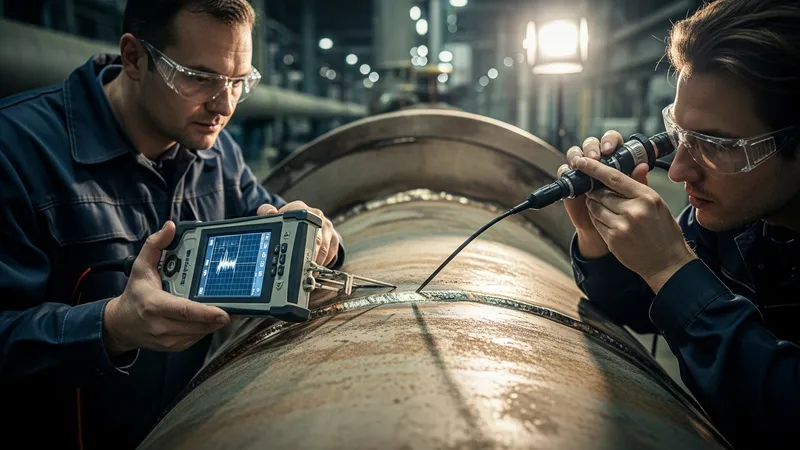
- Ultrasonic Testing (UT): This method uses high-frequency sound waves to detect discontinuities within the weld. UT can typically identify internal and surface-breaking flaws, and its results may be recorded for later analysis. Learn more about UT.
- Radiographic Testing (RT): Radiography utilizes X-rays or gamma rays to generate images of the weld’s internal structure. RT is widely used for identifying volumetric defects such as porosity or slag inclusions. More on RT principles.
- Magnetic Particle Inspection (MPI): This technique is applied primarily to ferromagnetic materials to reveal surface or slightly subsurface discontinuities. By inducing a magnetic field and using fine particles, inspectors may visualize defects along the weld surface. See MPI details.
Ultrasonic testing is valued in the industry because it typically provides immediate feedback and quantitative data about flaw dimensions and locations. This makes UT useful for real-time decision-making during pipeline assembly or repair. There are also several modes of UT, such as phased array and time-of-flight diffraction, which can improve detection resolution under certain circumstances.
Radiographic testing remains a well-established technique, especially for welds with possible internal porosity or inclusions that may not be detected easily by other means. Careful radiation safety procedures must be observed, and interpretation of radiographic images requires trained personnel to distinguish between relevant and irrelevant indications.
Magnetic particle inspection is typically used to augment other methods or for quick evaluation of the surface area after cleaning. This approach can rapidly reveal surface cracks resulting from weld cooling or mechanical stress, especially in carbon steel pipeline materials. MPI provides visual evidence but is generally not suitable for non-ferromagnetic materials.
Standards for girth weld testing have evolved to accommodate greater accuracy and consistency. International guidelines, such as those set by the American Society for Nondestructive Testing (ASNT) or the American Petroleum Institute (API), outline the minimum requirements and recommended practices for girth weld inspections. Adoption of advanced detection techniques continues to increase as operators seek improved diagnostic reliability.
In summary, pipeline girth weld testing leverages qualified inspection methods to detect imperfections and promote pipeline safety. The following sections will further explore specific components, technologies, and factors that are central to this process.