
Structural Drying: How Rapid Technology Accelerates Moisture Removal

Structural drying refers to the controlled process of removing excess moisture from building materials after water incidents, such as leaks or floods. This practice utilizes a combination of airflow, dehumidification, and moisture measurement to help return affected environments to an acceptable dryness level. The integration of rapid technology in this field often supports faster water removal and increased monitoring precision, potentially reducing the extent of structural damage in a timely manner.
Modern structural drying incorporates specialized equipment designed to target moisture trapped within walls, floors, and other materials. High-speed air movers and dehumidifiers work together to promote evaporation and humidity control, while advanced moisture detection tools allow technicians to monitor progress continuously. Selection and configuration of devices depend on building size, types of materials involved, and the volume of water present, which can influence the timeframe required for complete drying.
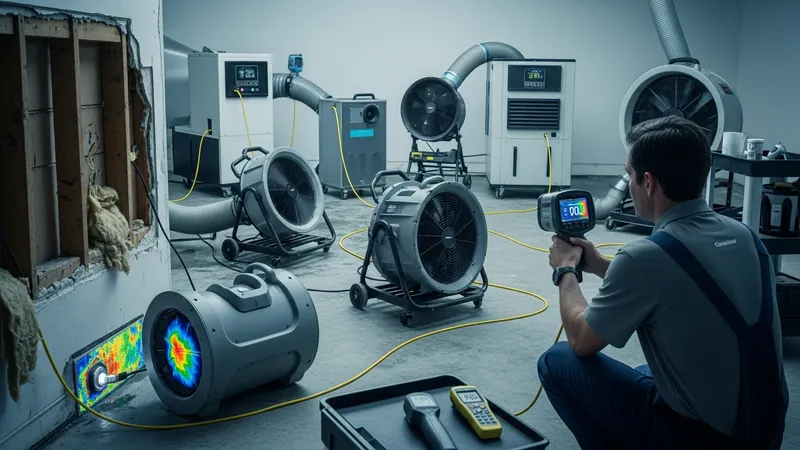
- High-capacity centrifugal air movers: Devices that may increase evaporation by directing air across surfaces. Frequently used in industrial and residential settings for accelerated drying.
- Refrigerant and desiccant dehumidifiers: Equipment employed to extract moisture from the air, with desiccant types commonly used for lower humidity environments or cooler temperatures.
- Non-invasive moisture meters: Instruments that help detect hidden moisture within materials without the need for destructive testing.
The effectiveness of structural drying often relies on matching the right technology to the environmental context. Using air movers can facilitate the evaporation phase, but without sufficient dehumidification, airborne moisture may settle back on materials. Therefore, integrating dehumidifiers to capture vaporized water typically enhances the results. In some cases, moisture meters allow ongoing adjustments based on real-time readings, supporting an evidence-based drying approach.
Drying timelines may vary significantly depending on factors such as room dimensions, structural complexity, and climate. Advanced technologies can contribute to more controlled results, but building type and pre-existing conditions frequently influence recovery speed. Monitoring equipment helps ensure that every area receives appropriate attention, reducing overlooked moisture pockets that might otherwise contribute to future complications.
Cost considerations for structural drying projects are shaped by the specific equipment deployed and the duration of operation. Pricing may fluctuate based on the size and number of devices required as well as the sophistication of the monitoring systems. Professional operators typically provide detailed breakdowns reflecting these variables, allowing property owners to understand how selections may impact overall expenses.
The adoption of structural drying with rapid technology supports a more standardized and measurable process. This approach may contribute to minimized material degradation and can facilitate restoration efforts. The subsequent pages explore important components, operational details, and considerations that influence outcomes in this evolving field. The next sections examine practical components and considerations in more detail.