
Wealth Management Portfolios: How Asset Allocation Works

Wealth management portfolios are designed to organize and grow financial assets in a structured and diversified way. The central concept in these portfolios is asset allocation, which involves distributing investments among different asset categories such as stocks, bonds, and alternative investments. This approach aims to help individuals align their portfolios with their financial objectives and preferences regarding risk and return, especially within the regulatory and market environment of Saudi Arabia.
Asset allocation frameworks often consider several factors, including personal investment horizons, the need for liquidity, and tolerance for potential market fluctuations. Portfolio construction in Saudi Arabia typically involves balancing local equities, regional and international bonds, and occasionally, Shariah-compliant assets. Financial institutions in the region often provide guidance to help investors create diversified strategies that suit uniquely local conditions.
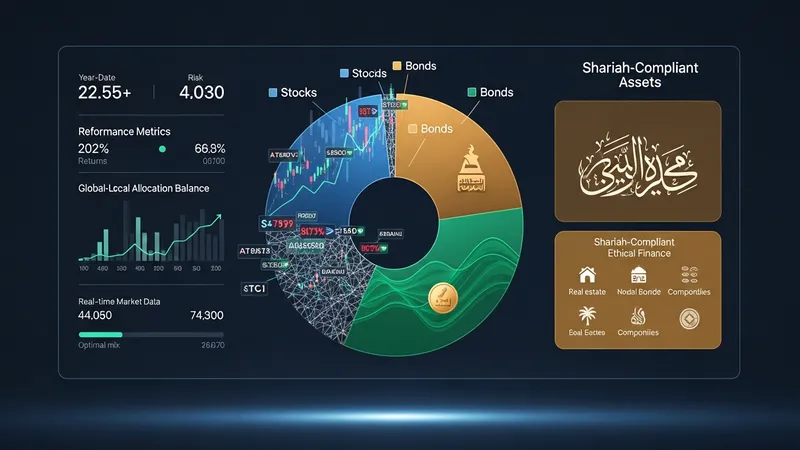
- Balanced Portfolio with Saudi Equities and Sukuk — A diversified approach including a mix of equities and Shariah-compliant bonds (Sukuk), with fees typically ranging from SAR 3,000 to SAR 10,000 per annum depending on portfolio size and services.
- Growth-Oriented Diversified Portfolio — Focused on higher allocation to stocks including regional and global equity funds, commonly charging advisory fees between 1% and 2% per year based on assets under management.
- Conservative Income Portfolio with Saudi Bonds — Primarily invested in domestic government and corporate bonds, with typical management costs varying from SAR 2,000 to SAR 8,000 annually, depending on asset mix and management structure.
Each portfolio example above reflects a different approach to asset allocation seen in the Saudi financial market. The balanced portfolio typically blends growth and stability by combining stocks with Sukuk, while growth-oriented models tilt toward equities for potential higher returns, accepting greater volatility. Conservative income portfolios, on the other hand, are designed to provide more predictable income and may appeal to those with lower tolerance for risk.
Wealth management services in Saudi Arabia are regulated by the Capital Market Authority (CMA), which oversees processes, transparency requirements, and investor protections. Investors may encounter advisory and management fees that depend on the portfolio size and complexity, and it is common to see annual charges expressed as either fixed SAR amounts or as a percentage of assets managed.
Considerations in selecting portfolio strategies often include Shariah compliance, access to local versus international markets, and the investor’s timeline for achieving financial objectives. Providers typically evaluate long-term expectations and current market dynamics before proposing a specific allocation model.
Because market conditions in Saudi Arabia can shift in response to regional developments or changes in regulations, asset mixes in managed portfolios are regularly reviewed. Rebalancing may occur to maintain alignment with agreed-upon objectives and risk limits, rather than chasing short-term market gains.
In summary, wealth management portfolios in Saudi Arabia rely on asset allocation frameworks tailored to local regulatory, cultural, and market environments. The next sections examine practical components and considerations in more detail.