
Vertical SaaS For Construction: How Industry-Specific Software Supports Project Delivery

Feature categories and module scope related to construction-focused SaaS platforms
Construction-oriented SaaS platforms are typically organized into modules that map to core project activities. Common module categories include project controls (schedules, milestones), document management (drawings, submittals, RFIs), financials (estimates, budgets, change orders), and field operations (inspections, daily reports, safety observations). In United States projects, financial modules frequently need to support lien waiver tracking and certified payroll where applicable. Teams often evaluate which combination of modules covers their workflows rather than adopting every available feature.
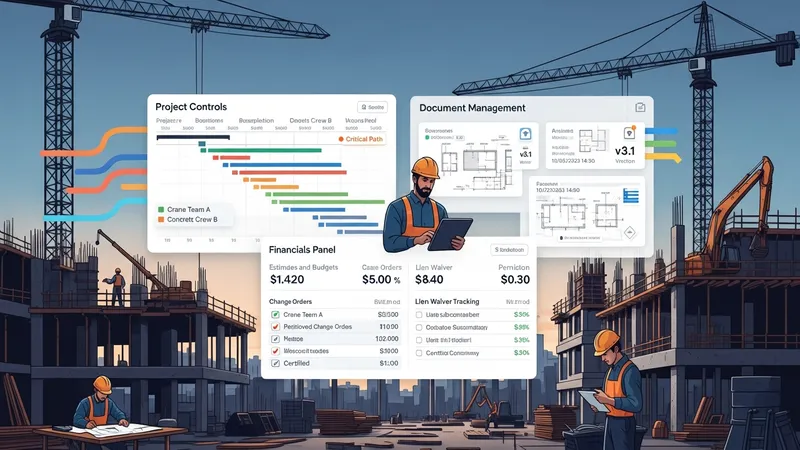
Project controls modules may include Gantt scheduling, resource allocation, and baseline comparisons that help teams understand schedule variance. Document management modules commonly provide versioning and permissions to ensure the correct drawing set is available to field crews. Financial modules in the United States may connect to typical accounting packages, enabling cost-to-complete reporting. Field operations modules often emphasize mobile capture and photo documentation, enabling faster assembly of record packages for permits and inspections.
Module scope can affect implementation complexity and total cost of ownership. Comprehensive suites may reduce the need for point solutions but can require more configuration and training; conversely, focused tools that specialize in a single area may integrate into existing stacks with less disruption. Decision factors often include project size, subcontractor ecosystem, typical contract types used in U.S. markets, and whether the organization manages multi-project portfolios or primarily single-project workstreams.
When specifying modules, teams commonly document required workflows and handoffs to identify missing capabilities. For example, a construction manager may map the sequence from RFI issuance to change-order billing to ensure financial controls are present. Considerations such as offline field access, audit logs for contractual records, and support for common U.S. file formats (e.g., PDF, DWG) are often included in module requirement lists to align vendor offerings with operational needs.