
Telehealth Platforms For Therapists: Key Features, Functions, And Clinical Use

Many clinicians and practices now use integrated online systems that enable remote assessment, psychotherapy, and practice administration through secure audio‑visual communication, messaging, and recordkeeping. These systems combine synchronous video calls with asynchronous messaging, appointment calendars, electronic notes, and basic billing tools to reproduce core aspects of an in-person practice within a digital environment. The concept centers on software and services that support clinical workflows while attempting to maintain confidentiality, documentation, and continuity of care.
Typical implementations pair a clinician-facing interface for session management and clinical notes with a client portal that handles appointment requests, intake forms, and secure messaging. Additional components often include measurement instruments, consent workflows, and interfaces for third‑party services such as insurance claims or laboratory results. Functionality, user experience, and the degree of integration can vary; available options may focus on single features (for example, video only) or bundle multiple administrative and clinical capabilities.
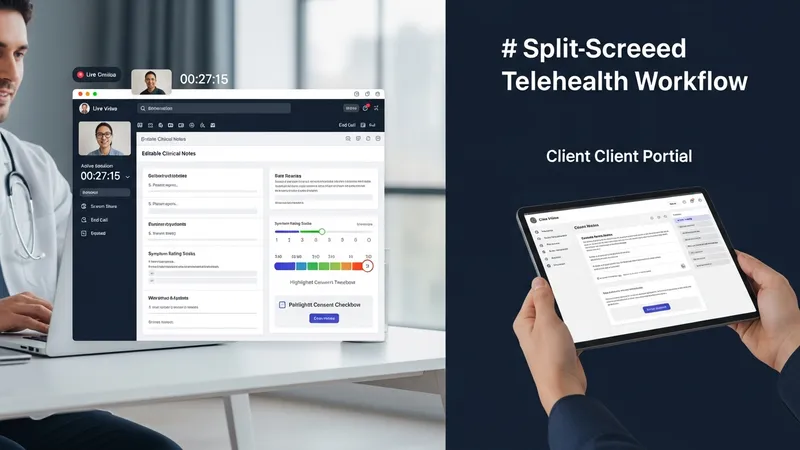
- Secure video consultation and session management systems — Platforms oriented to synchronous therapy sessions that provide encrypted video calls, session scheduling, and clinician controls for recording consent and session metadata.
- Practice management and scheduling tools with client portals — Systems that emphasize appointment workflows, intake questionnaires, automated reminders, and secure client access to documents and messages.
- Electronic clinical documentation and outcome-tracking integrations — Tools that support structured note templates, measurement-based care instruments, and interfaces with electronic health record (EHR) systems or registries.
Comparing these example categories often clarifies how a service aligns with practice needs. Video-first systems may specialize in real‑time session stability, bandwidth optimization, and clinician controls for virtual session settings. Scheduling-oriented platforms may prioritize calendar integrations, automated reminders, and intake forms that reduce administrative friction. Documentation-focused tools may include structured templates and outcome tracking that can support clinical measurement. Each category frequently overlaps; many offerings combine elements to support multiple parts of a clinician’s workflow.
Security and privacy measures are central considerations across all system types. Typical safeguards may include transport-layer encryption, role-based access controls, audit logs, and options for data residency. Documentation and consent workflows often accompany technical safeguards, with platforms providing templates or fields to record informed consent for remote care and data handling. Regulatory and professional obligations differ by jurisdiction, so platform capabilities for exportable records or configurable retention settings can be relevant to compliance efforts.
Integration with administrative functions commonly affects day-to-day efficiency. Appointment scheduling that syncs with calendar applications, automated appointment reminders sent by email or SMS, and basic invoicing or payment processing modules can reduce manual tasks. Some systems offer connections to third-party billing and practice management services or support standard export formats for statements and claims. The degree of automation and supported payment or payer workflows typically varies by product and market segment.
Clinical usability is another dimension where solutions diverge. Some interfaces prioritize streamlined session initiation and whiteboard or screen-sharing features that may be useful in psychotherapy or psychoeducation. Others emphasize built-in assessment tools, progress tracking dashboards, or structured note templates aligned to clinical frameworks. Training and onboarding materials, as well as configurable templates, often influence how readily a clinician can adapt the software to existing therapeutic processes.
In summary, the core concept involves electronic systems that bring together live communication, client-facing portals, recordkeeping, and administrative tools to support remote clinical practice. Offerings may specialize in real‑time video, administrative automation, or documentation and measurement; many products combine these capabilities to varying degrees. The next sections examine practical components and considerations in more detail.