
Supplements For Men Over 50: Key Nutrients And Considerations In The USA

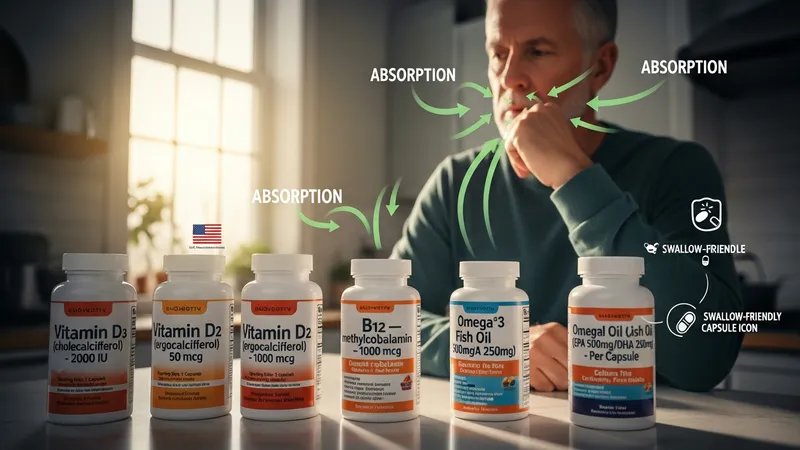
Types of nutrient forms and ingredient considerations for men over 50 in the USA
Different nutrient forms can affect absorption and tolerability. For example, vitamin D is sold as D2 (ergocalciferol) and D3 (cholecalciferol), with D3 often used in U.S. supplements because it may raise serum 25-hydroxyvitamin D more effectively in some studies. B12 appears in several chemical forms such as cyanocobalamin and methylcobalamin; U.S. clinicians and laboratory reports may note which form is being used when interpreting response. Omega-3 products vary by source (fish oil, algal oil), concentration, and the balance of EPA to DHA.
Bioavailability and excipient choices can matter for older adults. Some formulations are designed for easier swallowing (capsules vs tablets) or for better absorption with meals. In the United States, consumers often consider whether a product is standardized for an active component (for example, a declared milligram amount of EPA/DHA) and whether it lists auxiliary ingredients that may affect tolerability. Labels commonly show serving size and nutrient amounts per serving, which can be compared to U.S. dietary reference intakes.
Standardized extracts and single-nutrient versus multi-nutrient formulations are common distinctions. Single-nutrient products allow targeted dosing for a specific deficiency or need, whereas multivitamin–mineral products provide broader coverage of several micronutrients that may be low in U.S. dietary patterns. U.S. nutrition surveys frequently show variability in intake of nutrients such as vitamin D and omega-3s, which informs why both single-ingredient and combination products are available on the market.
Third-party verification and label clarity are practical factors. U.S. third-party organizations such as U.S. Pharmacopeia (USP) and NSF International provide testing and verification programs that some manufacturers use; consumers and clinicians sometimes look for these marks as one element of product evaluation. These organizations typically test for ingredient consistency and contaminants and provide searchable directories for interest in U.S.-market products.