
Small Capital Business: Practical Steps To Start With Limited Funds

Small-capital business planning describes approaches for starting commercial activity with limited initial capital. The concept typically focuses on models that reduce upfront expenditures, prioritize quick revenue pathways, and use scalable processes so owners can adapt spending as demand develops. It encompasses identifying low-capital business models, estimating realistic initial outlays, and preparing simple operational plans that emphasize cash preservation. The goal of this approach is to provide a structured route for launching a venture using conservative assumptions and iterative testing rather than large upfront investment.
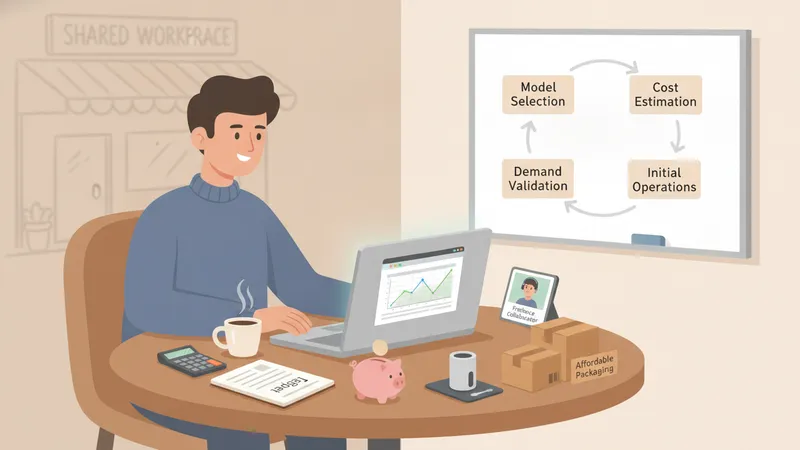
This planning approach often separates activities into discrete stages: model selection, cost estimation, demand validation, and initial operations. It emphasizes methods for reducing fixed costs (for example, relying on freelance support or shared workspaces), choosing product or service mixes that can be adjusted quickly, and creating a minimal viable offer to assess customer interest. The framework typically encourages tracking short-term cash flows and incorporating feedback loops so founders can pivot or scale without committing extensive capital.
- Service-based freelance offerings — providing time-based skills such as design, writing, bookkeeping, or technical support with minimal equipment and variable scheduling.
- Low-inventory product sales — using print-on-demand, dropshipping, or small-batch production to avoid large stock purchases while testing product-market fit.
- Micro-consulting or tutoring — structured hourly or packaged advice sessions delivered remotely or locally, relying mainly on expertise and simple scheduling tools.
Service-based freelance offerings often require little more than a reliable internet connection, a portfolio or sample work, and an online presence to reach initial clients. Typical immediate costs may include a basic domain and hosting, simple productivity software, and optional membership in professional directories; these are commonly lower than product-oriented launches. Services can allow direct, rapid feedback from early buyers and may permit income to start flowing soon after initial outreach efforts. This model can be suitable when skills are transferable and the founder prefers flexible work arrangements.
Low-inventory product sales use third-party fulfillment or production-on-demand to reduce initial purchases of finished goods. This option typically shifts capital from inventory to product development and marketing experiments. Common activities include testing designs via limited runs, using third-party platforms for listings and fulfillment, and iterating product variations based on real orders. The approach can reduce warehousing and obsolescence risk, though it may yield lower per-unit margins; founders may need to measure unit economics carefully to determine viability.
Micro-consulting and tutoring rely primarily on subject-matter expertise and scheduling systems rather than inventory or heavy equipment. Initial setup may include a simple booking tool, a professional payment method, and basic materials or lesson plans. These models often allow pricing flexibility—hourly rates or multi-session packages can be used—while enabling founders to calibrate offerings from direct interaction with clients. They can also be combined with digital products, such as short guides or recorded sessions, to create additional revenue streams with limited incremental capital.
Across these examples, typical validation techniques include small paid tests, pilot client agreements, simple landing pages, and outreach to a target audience through organic channels. Early validation may involve offering reduced-scope trials or collecting pre-orders to confirm demand before expanding offerings. When estimating costs and planning early operations, many founders use conservative projections and short forecasting horizons (for example, monthly cash-flow estimates) to keep commitments aligned with available capital. These practices may help manage financial exposure while providing actionable evidence for incremental investment.
In summary, small-capital business planning centers on selecting low-capital models, estimating and prioritizing modest initial costs, and validating demand through lightweight experiments. The examples above—service-based freelancing, low-inventory product sales, and micro-consulting or tutoring—illustrate common low-capital approaches that may be adjusted to different skills and markets. The next sections examine practical components and considerations in more detail.