
Service Robots With AI: How Automation Is Enhancing Daily Operations

Types of AI Service Robots in Daily Operations
Service robots powered by AI take various forms depending on their intended task and environment. Mobile robots are frequently used in logistics to move goods within warehouses or distribution centers. These machines commonly feature autonomous navigation, obstacle avoidance, and adaptive routing to manage inventory movement. Collaborative robots, or “cobots,” are also gaining attention for their ability to work safely alongside humans in shared spaces, such as in hospitals or retail.
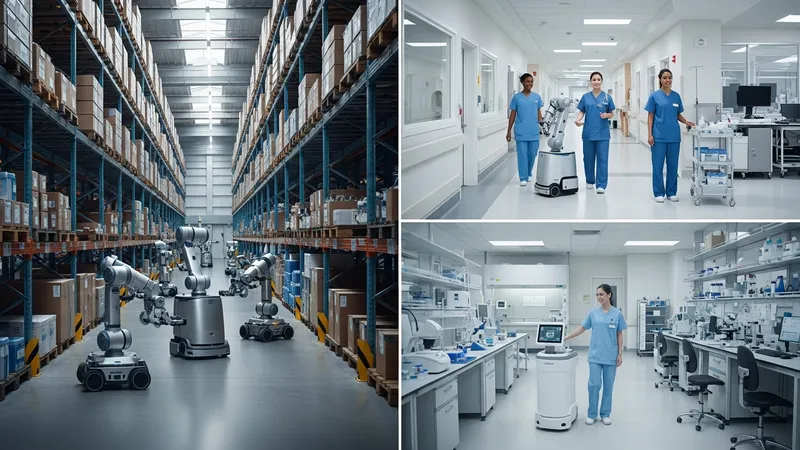
Stationary service robots are another category employed in environments requiring repetitive, precise actions. For example, some laboratory robots assist with sample sorting and analysis by using pre-programmed routines and real-time input data. Mobile service robots, by contrast, are designed to interact with diverse physical environments, overcoming challenges like dynamic obstacles or moving between floors via elevators.
Differentiation among these types often involves their sensor arrays, mobility systems, and integration with enterprise software. Some robots are equipped for complex communication with building systems, such as automated doors or temperature controls, allowing for more seamless task fulfillment. Others focus on simple, direct delivery, navigating corridors with pre-set maps and minimal user input.
End users may select the type of service robot based on operational requirements, facility layout, or the need for specialized sensors. Decision-making often considers aspects such as scalability, ease of deployment, and how robots can be networked with other digital systems. As technology progresses, distinctions between these types may shift with advancements in hardware and AI algorithms.