
SERDs Breast Cancer Treatment: Mechanism Of Action And Clinical Use

Mechanism of Action of SERDs in Breast Cancer Therapy
SERDs exert their effects primarily by entering breast cancer cells and binding to estrogen receptors with high affinity. Upon attachment, SERDs induce a conformational change that marks the receptor for degradation. The loss of estrogen receptors on the cell surface reduces the cell’s responsiveness to estrogen, which can play a significant role in limiting the growth signals that drive certain breast cancers.
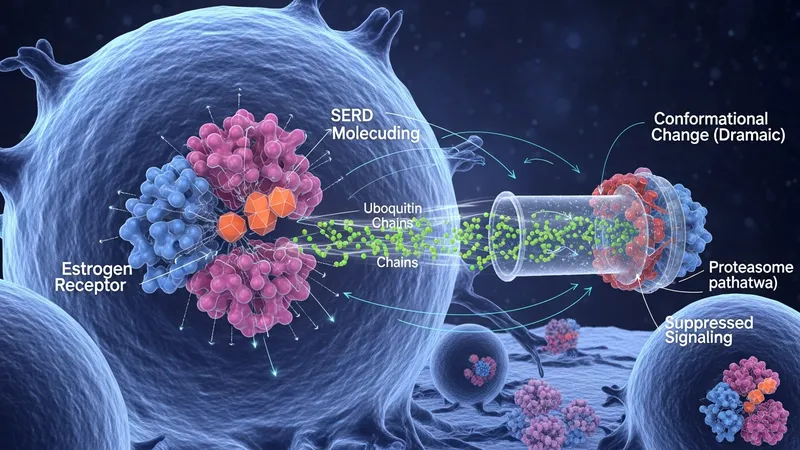
The process of estrogen receptor degradation by SERDs is distinct from simple blockade. While both SERDs and selective estrogen receptor modulators (SERMs) bind to the receptor, only SERDs facilitate its breakdown within cellular proteasome pathways. This dual action—receptor antagonism and facilitated degradation—typically leads to a more complete suppression of estrogen-dependent signaling in cancer cells.
Ongoing laboratory and clinical research continues to assess the potency and selectivity of different SERDs. Individual compounds, such as fulvestrant, have demonstrated ability to eliminate a substantial proportion of estrogen receptors in tumor tissue. This characteristic may enhance their utility in settings where resistance to other forms of endocrine therapy has emerged.
Comparative studies between SERDs and other anti-estrogen therapies reveal that SERDs may reduce the chance for cancer cells to bypass treatment by upregulating estrogen receptor production. As a consequence, they are being studied in various lines of treatment to understand their impact on long-term cancer control within hormone receptor-positive disease.