
Secure Network Architecture: Key Principles For Effective Protection

Segmentation and Traffic Control in Secure Network Architecture
Segmentation is a core technique frequently used in secure network architecture designs to control the flow of traffic and compartmentalise network resources. In the UK, enterprises deploy segmentation to separate different departments, data tiers, or application environments, thereby containing potential breaches.
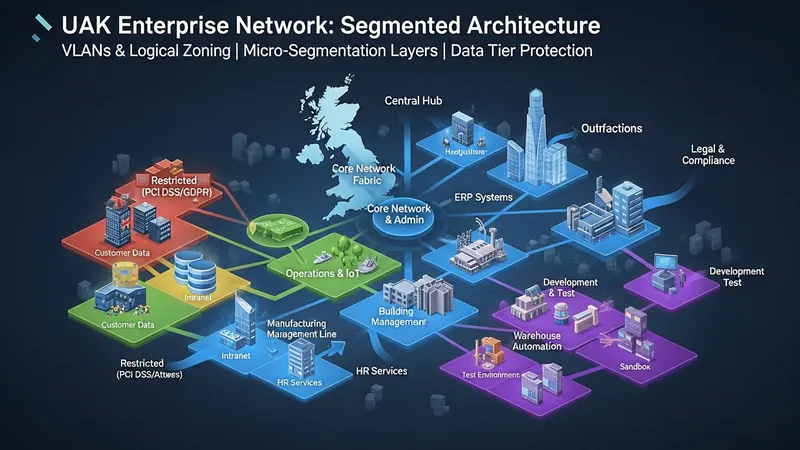
VLANs (Virtual Local Area Networks), network zones, and micro-segmentation are commonly referenced methods for achieving logical separation. These practices allow for more granular security policies—for example, permitting or denying network access based on user group memberships or specific application needs. The ability to isolate sensitive information is a priority for sectors handling regulated data in the United Kingdom.
Next-generation firewall systems with advanced rule sets play a critical role in enforcing segmentation. They can examine traffic at the application level and automatically block or flag suspicious behaviour. Implementation of such systems in the UK typically aligns with compliance mandates, such as those set by the NCSC or Information Commissioner’s Office (ICO).
Effective segmentation may present operational challenges, including increased complexity and management overhead. Regular audits and monitoring help ensure that segment boundaries align with current risk assessments and business priorities, supporting adaptive security postures in the UK’s organisational networks.