
Scaling A SaaS Business: Core Strategies For Sustainable Growth

Customer Onboarding and Retention Components for Scaling a SaaS Business
Customer onboarding processes can shape retention and support workload as the user base grows. Many U.S. SaaS providers implement staged onboarding with in-app guidance, knowledge bases, and templated email sequences to reduce manual assistance needs. Segmentation by customer size or use case often guides whether clients receive self-service onboarding or dedicated onboarding specialists, and those choices can affect the cost structure for scaling customer success functions.
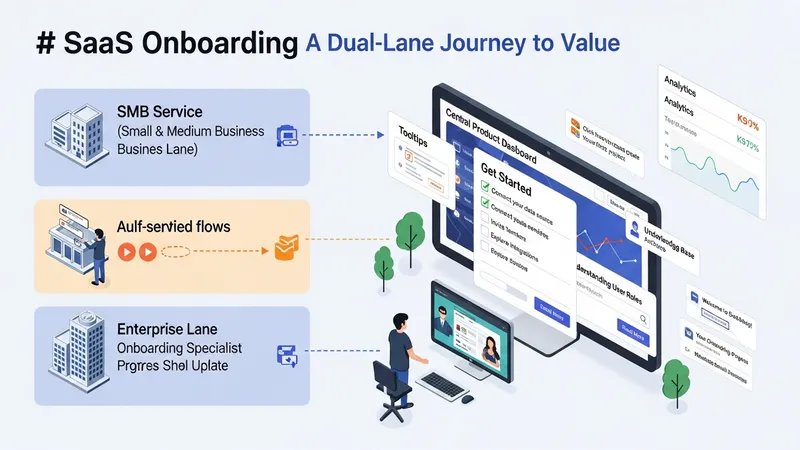
Measuring onboarding effectiveness commonly involves tracking activation metrics such as time-to-first-value and feature adoption rates. U.S.-focused firms often set cohort-based metrics to compare outcomes across different acquisition channels, helping to identify friction points that may require product changes or additional training content. Iterating on onboarding materials based on usage data is a typical practice to improve activation without increasing headcount proportionally.
Retention strategies frequently combine product improvements, customer success practices, and lifecycle communications. In the United States, enterprise customers may request service-level commitments and dedicated support, which can introduce contractual complexity and higher support costs. Tracking metrics such as churn by ARR band and net revenue retention provides visibility into whether onboarding and account management investments are sustaining revenue growth as the customer mix evolves.
Operational considerations for scaling customer success include workforce planning, tooling integration (CRM, support desk, analytics), and process standardization. U.S. companies may centralize recurring tasks and use automation for ticket routing or renewal reminders to maintain service levels. These measures often require careful design to preserve personalization for high-value accounts while keeping per-customer servicing cost manageable across broader segments.