
Scaling A SaaS Business: Core Strategies For Sustainable Growth

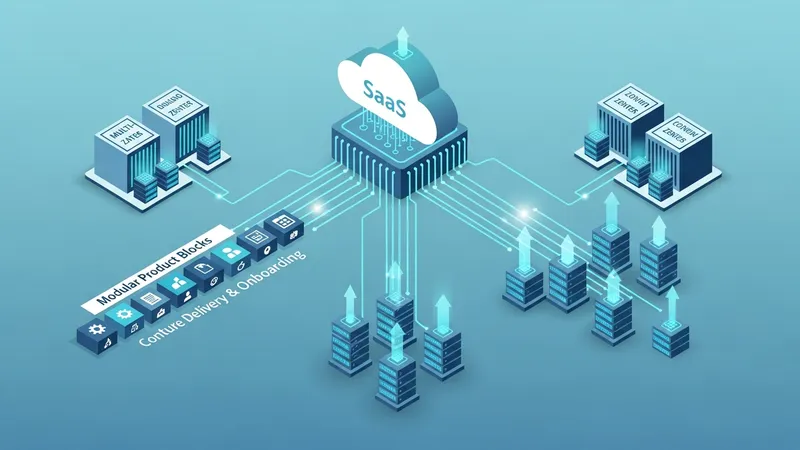
Scaling a software-as-a-service company involves expanding product availability, customer base, and internal operations while preserving system reliability and unit economics. This process typically addresses capacity planning, modular architecture, and processes that support repeated customer onboarding and feature delivery. The aim in scaling is to increase recurring revenue and user volume without proportionally increasing downtime, friction, or cost per customer.
Key areas in this expansion often include infrastructure provisioning, payments and subscription management, customer success workflows, and observability. Each area may require different toolsets and operational adjustments as usage patterns grow; for example, infrastructure may need autoscaling and multi-zone redundancy, while billing systems may need reconciliation and tax handling that scale with transaction volume. Technical and organizational alignment is commonly necessary to reduce risk as scale increases.
- Amazon Web Services (AWS) — Common infrastructure platform providing compute, storage, and managed services; typical monthly infrastructure spend for growing U.S. SaaS companies can range from about $50 to $50,000+ depending on traffic and architecture choices.
- Stripe (U.S.) — Payment processing and subscription billing used by many U.S.-based SaaS firms; processing fees often include per-transaction charges around 2.9% + $0.30 USD, with additional monthly fees for advanced billing features depending on volume.
- HubSpot (U.S.) — CRM and onboarding automation platform commonly used for customer lifecycle management; pricing tiers for U.S. customers can range from entry-level plans around $50/month to enterprise bundles in the low thousands per month.
- Datadog (U.S.) — Observability and monitoring platform used to track performance and incidents; U.S. pricing varies by product (infrastructure, APM, logs) with entry-level costs often starting under $10 per host per month and scaling upward with retention and volume.
These examples represent types of tools often present in scaling stacks rather than an exhaustive or ranked set. Selection criteria that are commonly referenced include integration capability with existing systems, U.S. data residency and compliance considerations, predictable billing, and the ability to handle expected traffic patterns. When evaluating vendors, teams typically map expected growth scenarios to estimated monthly costs and integration complexity to understand trade-offs between vendor-managed services and self-hosted components.
Infrastructure choices influence operational behavior and cost structure as usage increases. For U.S.-based SaaS providers, regional availability zones and data-center locations may affect latency for local users and compliance with data-handling expectations. Autoscaling mechanisms can reduce manual intervention, but they also require monitoring and budget guardrails to avoid unexpected spend. Architecture patterns such as microservices or serverless functions may be adopted to allow independent scaling of components that experience different load profiles.
Customer onboarding and success processes often scale non-linearly as the user base grows. Automation of in-app guidance, templated onboarding journeys, and tiered support models can help maintain response times and quality. In the United States, customer expectations for response times and support channels can vary by industry and segment; many companies measure Net Retention Rate and churn to understand whether onboarding and product-market fit are sustaining growth without excessive manual support costs.
Observability and incident management become more important with scale since outages affect larger user populations. Implementing metrics, distributed tracing, and alerting that align with service-level objectives commonly used in U.S. SaaS operations may reduce mean time to detect and repair. Teams often create runbooks and incident postmortems to institutionalize learning, and they may allocate budget for third-party monitoring and error-tracking services to accelerate root-cause analysis.
Security, compliance, and legal considerations typically expand as customer data volumes grow and regulatory scrutiny increases. U.S. SaaS businesses commonly evaluate controls for access management, encryption, and vendor security assessments as part of scaling. Compliance frameworks or contractual requirements from enterprise customers can influence choices around regional hosting, third-party processors, and identity providers, and these considerations often affect both timeline and cost estimates.
In summary, scaling a subscription-based software company centers on coordinating infrastructure, billing, customer success, observability, and security in ways that accommodate growth while controlling cost and risk. The tools listed above illustrate common categories—compute and storage, payments, CRM/onboarding, and monitoring—that teams often address. The next sections examine practical components and considerations in more detail.