
Private Lending Companies: How They Operate And Structure Loans

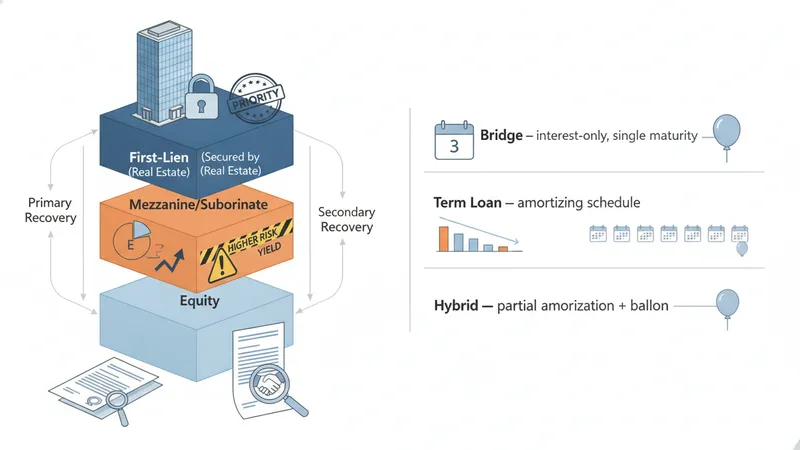
Structures and loan types used by private lending entities
Private lending arrangements often fall into distinct structural categories that reflect collateral, seniority, and intended use of funds. For example, first‑lien loans secured by real estate typically provide priority over later claims and may limit lender exposure to the collateral value. Subordinate or mezzanine debt occupies a different risk position and can pair with equity participation to offset higher yield expectations. Understanding the structure clarifies recovery prospects and contractual obligations when assessing a proposal or reviewing a loan agreement.
Loan term length and amortization conventions can differ substantially across structures. Short-term bridge loans may be interest-only with single maturity payments, while term loans for businesses may amortize principal over a defined schedule. Some private lenders use hybrid models such as partial amortization with a final balloon payment. These choices affect borrower cash flow needs and may influence the types of collateral or guarantees that a lender requests as additional protection.
Covenant design often corresponds to structure and risk exposure. Asset-based facilities may include periodic valuation checks and controlled disbursement schedules tied to project milestones. Business financing frequently uses financial covenants such as minimum liquidity thresholds or leverage caps. Lenders in private markets may also negotiate cure periods, grace windows, and default remedies specific to the asset class to reduce ambiguity in enforcement and recovery planning.
Secondary features like prepayment provisions, default interest, and exit fees are commonly part of structural negotiations. Prepayment language can affect borrower flexibility to refinance if market conditions change, while default rates and enforcement protocols shape recovery timelines. Parties may also define events of default and remedies that trigger collateral acceleration, foreclosure procedures, or negotiated workout paths, which are important practical considerations for both lenders and borrowers contemplating private financing.