
Premium Flight Options: Key Differences Between Economy, Premium Economy, And Business

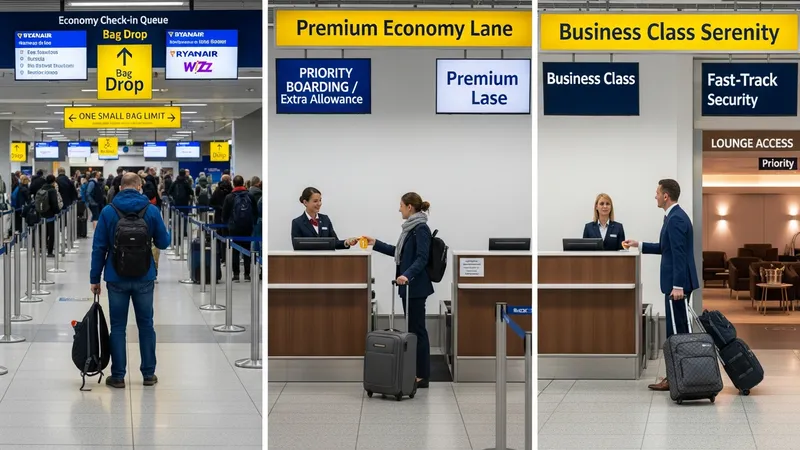
Baggage Allowances, Airport Facilities, and Travel Experience Considerations related to Premium Flight Options: Key Differences Between Economy, Premium Economy, and Business
Baggage policies typically scale with cabin level, though implementation varies by carrier and fare family. Economy fares may include only carry‑on by default on some low‑cost or basic economy products, while standard economy often includes at least one checked bag on traditional carriers. Premium economy generally increases checked baggage allowance relative to economy, and business class commonly permits larger or additional checked pieces. Exact weight and piece limits depend on airline rules and route classifications.
Access to airport facilities is another differentiator. Business class passengers frequently receive lounge access, priority security and boarding, and dedicated check‑in counters, which can shorten processing times and provide quieter spaces pre‑departure. Premium economy travelers may sometimes receive priority boarding or extra check‑in benefits depending on the carrier, but access to premium lounges is less often included. These facility differences can affect the door‑to‑gate portion of travel more than in‑flight comfort alone.
Travel experience considerations include sleep quality, work capability, and recovery on arrival. Business cabins with lie‑flat seats and greater privacy may aid rest on overnight flights, while premium economy’s additional legroom and recline can improve comfort on daytime long sectors. Economy seating outcomes depend heavily on duration and aircraft; short‑haul economy may be functionally adequate for many regional trips, whereas longer flights often highlight the ergonomic advantages of upgraded cabins.
Operational factors such as aircraft type, route length, and seat availability can influence the practical differences among cabins. For example, some single‑aisle aircraft do not offer a distinct premium economy product, constraining options on certain short‑ or medium‑haul routes. Travelers and planners may therefore assess cabin features in the context of specific flights rather than assuming uniform offerings across carriers or fleets.