
POS Systems: How Point Of Sale Technology Supports Retail Operations

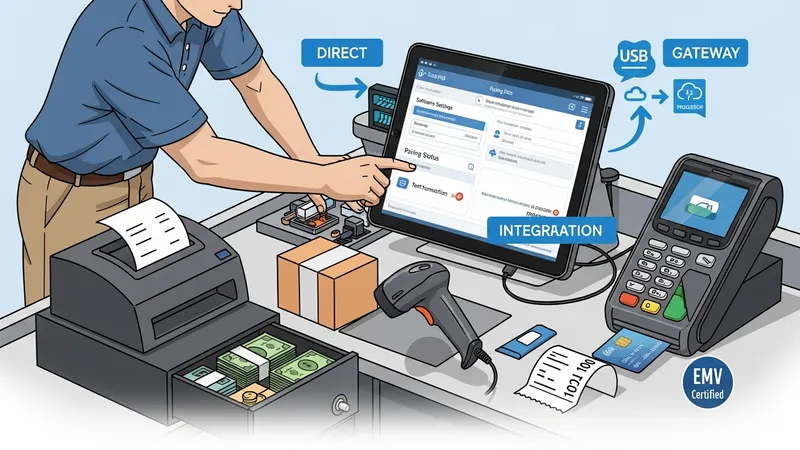
Hardware components and integration considerations for retail POS operations
Common hardware elements in retail point-of-sale setups include payment terminals, barcode scanners, receipt printers, cash drawers, and tablets or fixed terminals. Payment terminals that accept EMV chip cards and contactless methods may be paired with the POS software for authorization and settlement. Barcode scanners reduce manual input error for high-volume product scanning. Compatibility between software and hardware often depends on supported drivers or communication protocols, so testing peripherals with intended POS software is a frequent practical step before wide deployment.
Integration between POS software and payment processing hardware can follow direct or indirect models. In direct integrations, the POS transmits transaction information to an attached terminal that handles card interaction and returns an approval code. Indirect or gateway-based models may route payment data through a third-party processor. Each model can affect the ease of adding new payment methods, certification requirements, and the technical steps needed for EMV or contactless acceptance. Retailers often assess processor-agnostic options when they prefer switching commerce partners without major hardware changes.
Peripheral selection may depend on store layout, transaction volume, and mobility needs. For example, fixed checkout lanes often prioritize robust, wired scanners and printers, while smaller or mobile setups may opt for Bluetooth or battery-powered devices. Power and network topology are operational considerations; PoE (Power over Ethernet) or USB connections can reduce cable clutter. Retailers commonly document hardware inventories and serial numbers to streamline warranty claims and replacement planning, which can reduce downtime when devices fail or require service.
APIs and middleware are commonly used to connect POS systems with external services such as e-commerce platforms, accounting packages, and inventory management tools. These layers may normalize data formats and handle retry logic for intermittent failures. When planning integrations, stakeholders often map key data flows—orders, refunds, stock adjustments—and identify transaction reconciliation points. Thoughtful mapping can reduce discrepancies between systems and simplify troubleshooting when transaction records diverge.