
POS Systems: How Point Of Sale Technology Supports Retail Operations

Point-of-sale systems combine software and hardware to record retail transactions, manage product information, and handle payment processing at checkout. These systems typically capture sales details, update inventory counts, and create receipts while linking transactional data to broader business records. In many setups, the software component provides interfaces for cashiers and managers, while hardware such as terminals, scanners, and printers supports physical workflows. The overall function is to convert retail activity into trackable data that can inform day-to-day operations and periodic analysis.
Retail operators may use point-of-sale technology to coordinate sales with stock levels, accept a range of payment methods, and generate standard reports for accounting or tax purposes. POS setups can also integrate with online ordering platforms, customer relationship systems, and third-party payment processors through application programming interfaces (APIs). Depending on system design, features such as offline transaction capture, role-based access, and scheduled data synchronization can influence how reliably a retail operation continues during connectivity interruptions.
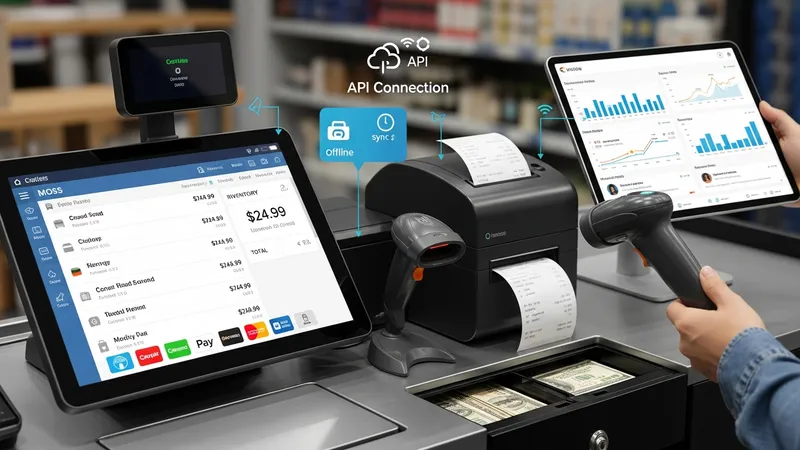
- Cloud-based POS platforms: Software hosted on remote servers that sync data across devices and often include automatic updates and web dashboards. These systems may be accessed from tablets and terminals and typically support third-party integrations.
- On-premises POS software: Locally installed solutions that keep transaction data on-site and may be favored where internet access is limited or where operators prefer local control. These systems can offer customization of hardware and workflows.
- Mobile and tablet POS apps: Lightweight point-of-sale applications designed for smartphones or tablets, often used for pop-up retail, tableside checkout, or supplemental terminals within a larger store footprint.
Comparing deployment models often involves trade-offs between convenience and control. Cloud-based platforms can reduce IT maintenance by centralizing updates and backups, while on-premises systems may limit external dependencies by keeping data within local networks. Mobile POS apps may be combined with either model to extend checkout points. Selection criteria that operators commonly consider include network resilience, integration needs with existing accounting or e-commerce tools, and how the chosen model supports inventory synchronization across multiple locations.
Inventory management as part of a point-of-sale implementation can range from simple stock decrementing on sale to multi-location transfer tracking and automated reorder points. Systems often use SKU-level records and may support barcode scanning to reduce manual entry errors. For retailers with seasonal fluctuations or diverse assortments, POS inventory tools can typically provide on-hand visibility and historical sell-through rates, which can inform purchasing cadence. Careful mapping of product attributes and consistent SKU use helps maintain accuracy across sales channels.
Transaction processing within modern point-of-sale environments commonly accommodates magnetic stripe, EMV chip, and contactless payments, alongside cash handling workflows. Integration with payment gateways and terminals may be direct or mediated by third-party processors; each arrangement can affect settlement timing and fee structures. Systems often log detailed tender breakdowns and may support refunds, exchanges, and partial payments. Workflow configuration, such as cashier permissions and reconciliation routines, typically aims to reduce errors and simplify end-of-day balancing.
Sales reporting features in POS software can generate summaries by time period, product category, or store location, and often export data for accounting software. Analytical modules may include gross sales, net sales (after discounts and returns), and sales per labor hour metrics commonly used in retail planning. While analytics may help identify patterns, they typically require clean data inputs and consistent operational practices. Retailers frequently pair POS reports with manual review processes to validate outliers and adjust for known anomalies.
In summary, integrated point-of-sale technology functions as a central operational backbone for retail activity by recording transactions, managing inventory, and enabling payment acceptance. Implementation choices—such as cloud versus on-premises, or fixed terminals versus mobile apps—may influence resilience, integration capability, and administrative overhead. The next sections examine practical components and considerations in more detail.