
Peer-to-Peer Investing: Understanding How Online Lending Platforms Work

Fee Structures, Tax Reporting, and Secondary Markets in Peer-to-Peer Investing
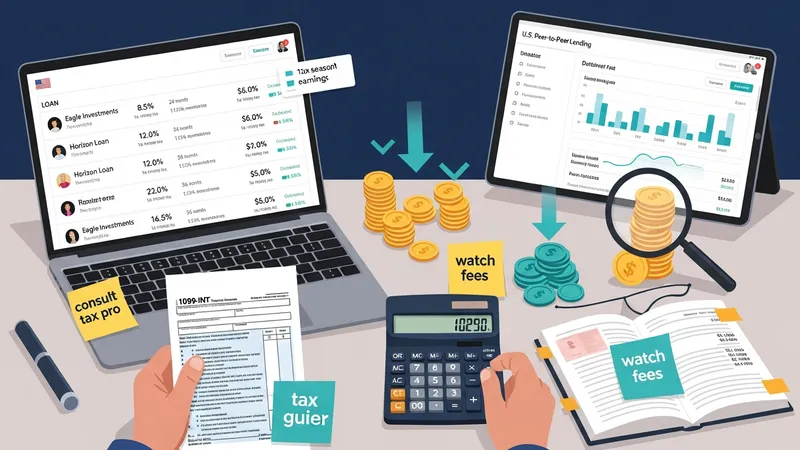
Fee schedules for U.S. platforms can include investor-facing servicing fees, transaction charges on secondary market trades, and borrower origination fees. These fees typically reduce net cash flows to lenders and raise effective borrowing costs for borrowers. Platforms generally disclose these fees in user agreements and help pages. For fiscal reporting, investors in the United States commonly receive IRS forms such as Form 1099 reporting interest and miscellaneous income where applicable; tax treatment can vary by loan type and by investor situation, so many investors consult tax guidance or a professional to interpret platform-issued statements.
Secondary markets may be available on some U.S. platforms or through third-party marketplaces, providing a mechanism to resell loan interests before maturity. Secondary-market liquidity can be limited, with prices influenced by perceived credit risk, remaining term, and prevailing rates. Transactions on secondary markets may incur additional fees and may settle with discounts or premiums relative to principal outstanding. Investors relying on potential resale should understand platform rules, notice periods, and fee implications, since resale is not guaranteed and market depth can fluctuate.
Operational transparency regarding fee allocation and tax reporting is central to investor assessment. Many U.S. platforms publish sample investor statements and explain how payment flows are allocated among principal, interest, fees, and recoveries. Investors may review archives of historical vintage performance and fee-impact examples to estimate net returns under different scenarios. Conservative modeling that incorporates published fee rates and a range of default assumptions may yield a more measured expectation of net portfolio outcomes than using headline interest rates alone.
When evaluating platform economics, consider both explicit fees and implicit costs such as time to monitor, bid-ask spreads on secondary trades, and potential collection inefficiencies. Platforms occasionally revise fee schedules or servicing arrangements, which can affect investor economics over time; monitoring platform disclosures and historical updates may provide insights into how fee changes have affected past cohorts. Such information is factual context rather than a predictor of future policy changes.