
Payroll Systems: Key Components, Functions, And Workflows Explained

Payroll systems are organized sets of processes, rules, and tools used to calculate employee compensation, manage deductions, and produce records for payments and reporting. They typically combine data on hours worked, salary rates, tax rules, benefit elections, and applicable statutory deductions to determine gross and net pay. A payroll system may operate as dedicated software, a module within a larger human resources or accounting system, or as an outsourced service managed by a third party. The scope often includes pay calculation, payment distribution, recordkeeping, and generation of compliance reports.
Core aims of a payroll system include accurate wage calculation, consistent application of withholding rules, and timely delivery of payments. Systems often implement business rules such as pay frequency, overtime calculations, shift differentials, and leave accruals. Integration points commonly include time and attendance sources, benefits administration platforms, and general ledger systems for accounting purposes. Effective payroll systems also maintain audit trails and documentation that can support internal review and external regulatory requirements.
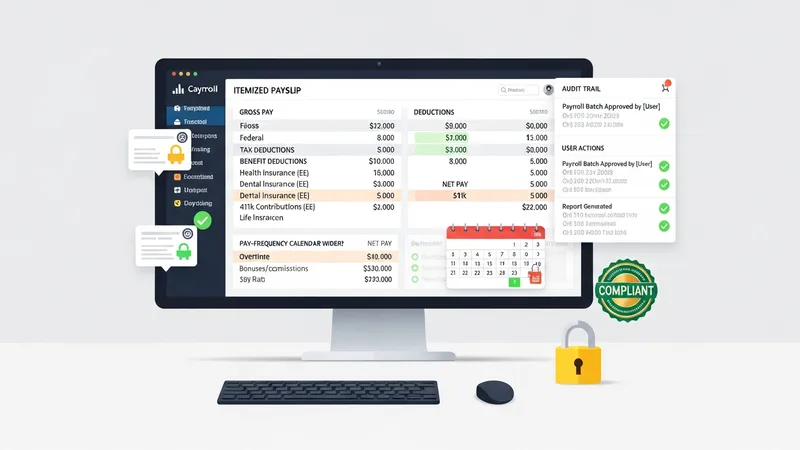
- Payroll software modules: standalone payroll applications or modules within HRIS/ERP platforms that perform automated calculations and reporting.
- Outsourced payroll services: third-party providers that process payroll and handle tax filings on behalf of an organization while providing payroll data and reports.
- Manual or hybrid approaches: internal processing using spreadsheets or templates combined with selective automation for specific tasks like direct deposit setup.
Automated payroll processing often follows a defined workflow: data collection, validation, calculation, approvals, payment execution, and posting to accounting systems. Data collection can include timecards, salaried schedules, commission inputs, and adjustments for bonuses or corrections. Validation steps may flag missing or inconsistent records and may route issues to payroll administrators for resolution. Approval stages typically require sign-off from managers or payroll specialists before finalizing runs; this reduces the risk of errors reaching payment execution.
Wage calculation logic in payroll systems commonly handles multiple pay elements in parallel, such as base pay, overtime, differential pay, commission, and one-off adjustments. Systems typically apply rounding rules, proration for partial periods, and carry forward year-to-date balances for benefits or deductions. Payroll calculations often must reconcile with employment contracts, collective bargaining agreements, and internal pay policies. Where applicable, systems may also support multiple pay cycles and varied payment methods for different classes of workers.
Tax withholding and statutory deductions are central functions and often require frequent updates to tax tables, social insurance rates, and local assessment rules. Systems usually support configurable tax parameters and deduction buckets so that withholdings can be computed by jurisdiction and by employee status. Many payroll setups provide reporting templates for tax remittance and year-end statements, while also maintaining histories needed for audits. Compliance features may include validation checks and alerts when configured thresholds are exceeded.
Integration with time and attendance tools, benefits administration, and accounting systems is a common emphasis in payroll design. Time capture methods such as biometric terminals, web timesheets, and mobile punch tools feed hours into payroll for validation and calculation. Benefits platforms provide enrollment and deduction feeds, which may affect both pre-tax and post-tax withholdings. Accounting integration helps post payroll expenses and liabilities to appropriate ledger accounts, supporting reconciliation and financial reporting.
Payroll records and reporting capabilities often include pay registers, tax remittance reports, general ledger summaries, and employee pay statements. Systems may allow the extraction of aggregated payroll metrics for internal analysis and statutory reporting. Security controls and access restrictions typically protect sensitive payroll data and restrict actions such as changing tax codes or initiating payments. The next sections examine practical components and considerations in more detail.