
Payroll Software Companies: Key Features, Capabilities, And Use Cases

Use cases and organizational considerations for payroll platforms
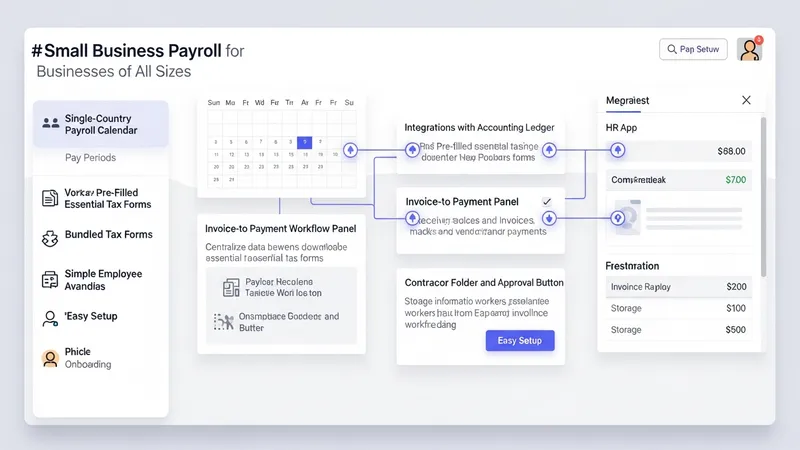
Payroll platforms may be chosen to meet different operational contexts: small organizations with simple pay structures, mid-sized firms requiring integrations with accounting and HR, and large enterprises that need multi-entity or multi-currency capabilities. Small operations often prioritize ease of use and bundled tax filings, whereas larger entities may emphasize custom reporting, advanced security controls, and scalable integration. Modular platform design can allow organizations to adopt functionality progressively as needs evolve.
Contractor and contingent workforce payments introduce distinct workflows. Processing contractor payouts may involve different tax treatments, varied documentation, and alternative payment rails. Platforms that support contractor-specific workflows—such as separate classification, different tax reporting, or simple invoice-to-payment flows—can simplify administration. It is common for organizations with a sizable contingent workforce to maintain distinct processes or separate vendor modules for non-employee payments.
Cost structures typically combine per-period or per-employee fees with possible platform or module charges. Organizations often estimate total cost of ownership by considering subscription fees, bank or payment provider charges for direct deposit, implementation costs, and internal personnel time. Budgetary planning often includes contingency for initial data cleanup and periodic updates to tax or benefit rules that may require vendor or internal effort.
Selection criteria frequently include feature coverage, integration capability, security measures, and vendor support options. Decision-makers often conduct parallel payroll runs, review reconciliation capabilities, and assess audit logs during evaluation. These considerations may help organizations align a platform to operational needs and compliance requirements without presuming universal suitability for all use cases.