
Overwater Villas: Features And Experiences In Saudi Arabia

Structural Design and Environmental Adaptation of Overwater Villas
The structural design of overwater villas in Saudi Arabia often incorporates technologies and methods suited to the coastal and lagoon environments. Foundations are typically based on pilings or reinforced stilts, engineered to withstand fluctuating water levels and saline exposure. Construction materials—such as marine-grade timber, corrosion-resistant steel, and concrete—are selected to balance durability with environmental adaptation. Additional reinforcement may be applied in areas exposed to prevailing winds or tidal changes, helping support long-term structural stability.
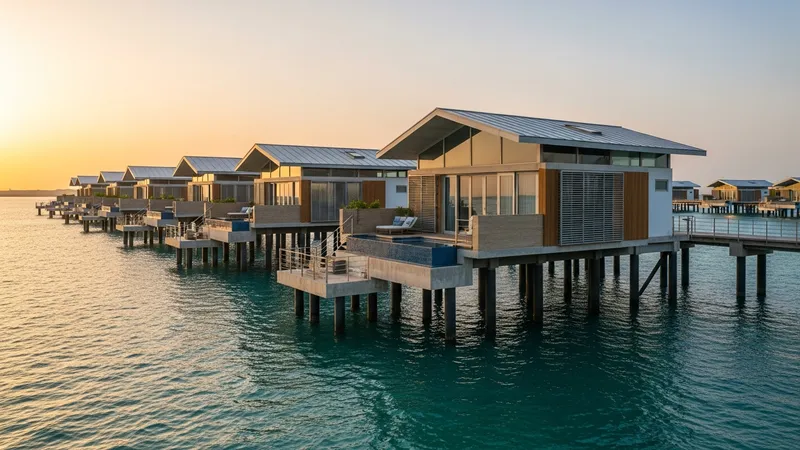
Integration with local environmental factors usually plays a part in the planning and execution of these villas. Architects and engineers may assess factors such as tidal flow, sedimentation patterns, and prevailing breezes when determining site layout. In arid climates like those found in parts of Saudi Arabia, design strategies may involve orienting buildings to enhance cross-ventilation or installing reflective roof materials to manage thermal gain. Such measures can reduce reliance on artificial cooling systems and support overall energy efficiency.
Overwater villas frequently utilize modular building systems that allow for efficient assembly and potential future adaptation. Prefabricated components delivered to the site can minimize disturbance to the surrounding environment, while modular design facilitates expansion or realignment should environmental conditions shift over time. Decking, railings, and cladding are commonly made from sustainable or locally sourced materials, supporting broader ecological stewardship objectives.
Adaptation strategies for overwater villas may also address issues such as coastal erosion or habitat preservation. Installing floating walkways or buffer zones can limit shoreline disruption, while landscaping with native plants can stabilize soils and filter runoff. Some developments apply best practices in environmental monitoring, working with ecologists to track impacts and implement mitigation steps when necessary, further ensuring harmony between built and natural environments.