
Medical Billing Services: Key Processes For Clinics And Healthcare Providers

Operational components of billing services for clinics and healthcare providers
Operational components typically include patient registration, eligibility verification, charge capture, coding, claims submission, payment posting, and follow-up. In the United States, eligibility checks often involve screening for Medicare, Medicaid, or commercial plan coverage and verifying prior authorization requirements where applicable. Charge capture may be performed within an EHR or via a separate practice management system, and errors at this stage commonly lead to downstream denials. Clinics often map specific staff duties across these functions to maintain throughput and manage accounts receivable days.
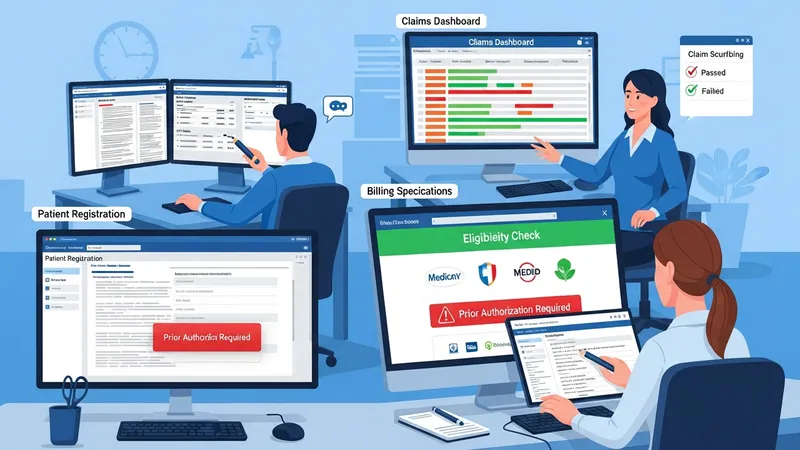
Staffing models vary across clinics: some maintain in-house teams for eligibility, coding, and follow-up; others outsource parts of the workflow to third-party RCM vendors or clearinghouses. Outsourced arrangements may aggregate volume across clients and provide specialized tools for claim scrubbing, while in-house teams retain direct control over documentation and patient interactions. When evaluating arrangements, clinics often consider interoperability with existing EHR systems, data security, and the ability to handle payer-specific requirements without compromising compliance with U.S. regulations.
Workflow automation can reduce manual data entry and repetitive checks. Examples of automation include electronic eligibility verification, automated claim scrubbing for format and common errors, and ERA-driven payment posting. Automation may shorten processing times and lower error rates in routine tasks, but practices typically retain manual review for complex claims, appeals, and clinical denials. Integration between clinical documentation and billing modules is a common operational priority in U.S. settings to ensure codes reflect clinical intent.
Operational monitoring often uses metrics such as clean claim rate, average days in accounts receivable, denial rate by reason, and collection percentage of billed charges. These indicators may help staff prioritize interventions; for instance, a spike in denials for missing prior authorizations may prompt process changes in registration. Practices in the United States may also benchmark performance against peer groups or published industry ranges, keeping in mind that payer mix and service lines materially influence typical values.