
Masters Abroad: Key Steps For Planning And Applying To International Graduate Programs

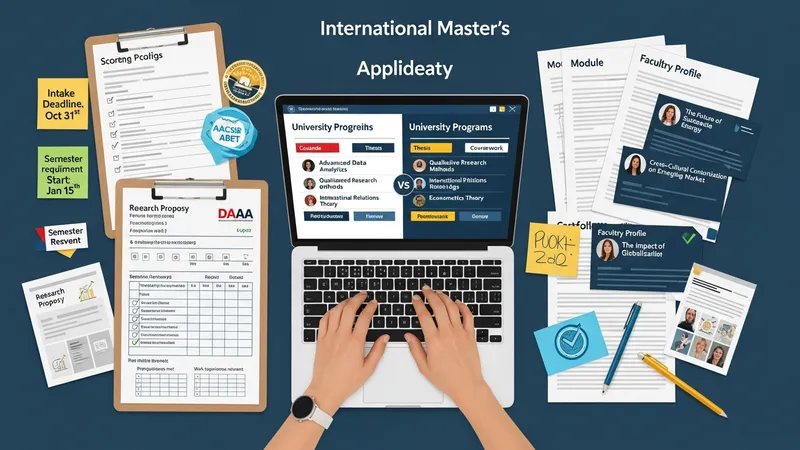
Program research and academic alignment for international master’s applications
Comparing program curricula and institutional offerings is a foundational planning step. Applicants often examine course lists, thesis versus coursework balance, credit structures, and module descriptions to determine academic alignment with prior study or intended specialization. Faculty profiles and recent publications may indicate available supervision for research-oriented programs. Accreditation and recognition of the awarding institution can influence future credential acceptance, so applicants may consult institutional accreditation statements or national higher-education authorities. This research phase typically narrows a broad field of options to a manageable shortlist based on academic fit and program format.
Applicants may use a simple scoring or checklist approach to evaluate program features without implying absolute rankings. Common checklist items include prerequisite coursework, minimum grade or GPA thresholds, required work experience if any, and the presence of laboratory or field components. Some programs require a research proposal or portfolio; others emphasize coursework and assessments. Understanding these distinctions can guide which documents to prepare and how to frame prior experience in application materials. Comparative notes often include practical considerations such as semester timing and intake dates.
Course recognition and credit transfer considerations often influence selection for candidates who expect to move between systems or seek further study. Credit systems—ECTS, quarter/semester credits, or local credit scales—may convert differently across institutions. Applicants may consult program handbooks or admissions offices to clarify whether past coursework may be credited and what evidence will be required. For international candidates, verifying whether a degree is considered equivalent for professional registration or further academic study in another country can be important.
Researching student support services and campus resources may be part of program selection for those concerned about integration and academic success. Services that applicants often note include academic advising, language support centers, research training, and library access. Practical facilities—laboratories, studios, or field equipment—can matter for certain disciplines. Considering these service and infrastructure elements alongside academic content can provide a fuller view of how well a program may support an incoming graduate student.