
Inventory Management Systems: Key Components And Core Functions Explained

Inventory Management Systems are software and procedural frameworks that help organisations record, monitor, and control physical stock across channels and locations. They combine hardware inputs (barcodes, RFID, scanners) with software functions (item master records, transactions, valuation) to maintain a clear audit trail for receipts, issues, transfers, and adjustments. These systems may operate on-premises or in the cloud and typically aim to present a single source of truth about on-hand quantities, committed stock, and available inventory for planning and fulfilment.
Key components within an inventory management approach often include real-time tracking, stock level policies, purchasing and receiving workflows, order processing, warehouse operations, valuation methods, and reporting. Each component interacts: tracking data feeds replenishment signals, valuation choices affect financial reporting and KPIs, and user access controls mediate who can change records. Describing these elements helps clarify how inventory systems support operational accuracy and financial transparency rather than serving a single, uniform purpose across all organisations.
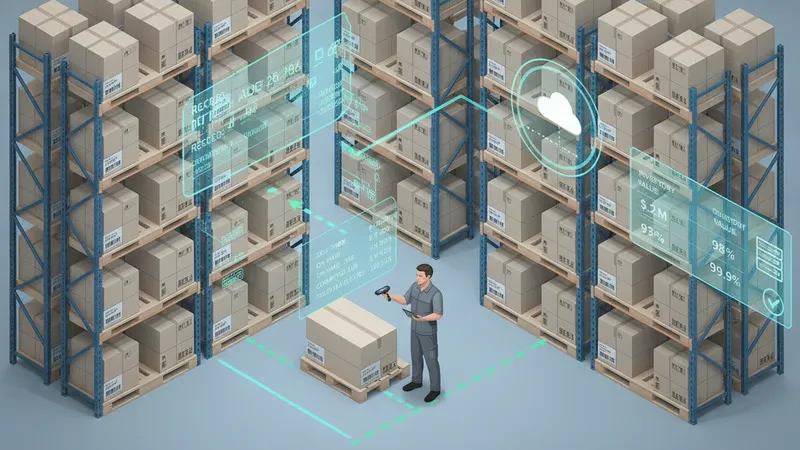
- Barcode-driven systems: Use 1D or 2D barcode labels with handheld or fixed scanners to capture transactions such as receipts, picks, and cycle counts; commonly used for cost-effective, reliable item identification.
- RFID-enabled systems: Employ passive or active RFID tags and readers to support faster scanning and bulk reads; often applied where rapid, non-line-of-sight identification is beneficial.
- Cloud-based inventory platforms: Offer centralised item records, multi-location visibility, and integration endpoints for sales and procurement channels; they may support APIs for point-of-sale, e-commerce, and ERP links.
Inventory tracking methods may be perpetual or periodic. Perpetual systems update stock records at each transaction and typically provide near real-time visibility, which can reduce discrepancies when paired with scanning workflows. Periodic approaches rely on scheduled counts and reconciliation and may suit low-transaction environments. Organisations often combine methods, using perpetual records for high-turn SKUs and periodic checks for slow-moving items. Selection often depends on transaction volume, accuracy requirements, and available scanning infrastructure.
Stock level management involves parameters such as reorder points, safety stock, lead time, and economic order quantities. Reorder point calculations can integrate average demand and supply lead time; safety stock may be set to cover variability in demand or supplier performance. Some organisations use automated triggers from the inventory system to generate purchase suggestions, while others prefer manual review. These mechanisms generally aim to balance service levels with carrying costs, and metrics such as fill rate and days of inventory often inform ongoing adjustments.
Purchasing and receiving workflows in inventory systems commonly include purchase order creation, supplier confirmation, goods receipt posting, and inspection or quality checks. Receiving transactions should update on-hand quantities and generate disposition records for inspected, quarantined, or returned items. Order processing links availability to allocation and picking instructions; allocation rules may reserve inventory for specific channels or customers. Well-configured workflows can reduce manual entry, but organisations typically validate automated steps with periodic reconciliation.
Inventory valuation and identification support are core financial and operational functions. Valuation methods such as first-in first-out (FIFO) or weighted average cost can change reported cost of goods sold and inventory valuation on financial statements and may therefore be selected in consultation with accounting practice. Barcode and RFID technologies help maintain accurate transaction timestamps and item provenance, which can improve traceability for batch or serial-controlled goods. Reporting and analytics draw on transactional history to produce KPIs such as turnover, stock ageing, and fill rates.
In summary, Inventory Management Systems bring together tracking, stock control, purchasing, warehousing, valuation, and reporting into a coherent framework that may improve visibility and operational decision-making. Implementation choices — including tracking technology, valuation approach, and automation level — tend to reflect organisational scale, transaction patterns, and regulatory needs. The next sections examine practical components and considerations in more detail.