
Internet Bills: Insights Into Service Provider Billing Practices

Equipment Charges in Internet Provider Billing Practices
A significant feature of internet billing is the charge for equipment such as modems, routers, or network extenders. Many United States providers either rent this equipment to customers for a monthly fee or allow for outright purchase. Rental fees are reflected as recurring line items, usually labeled with the type of device supplied. These charges are generally consistent across billing cycles unless there is a change in hardware or policy by the provider.
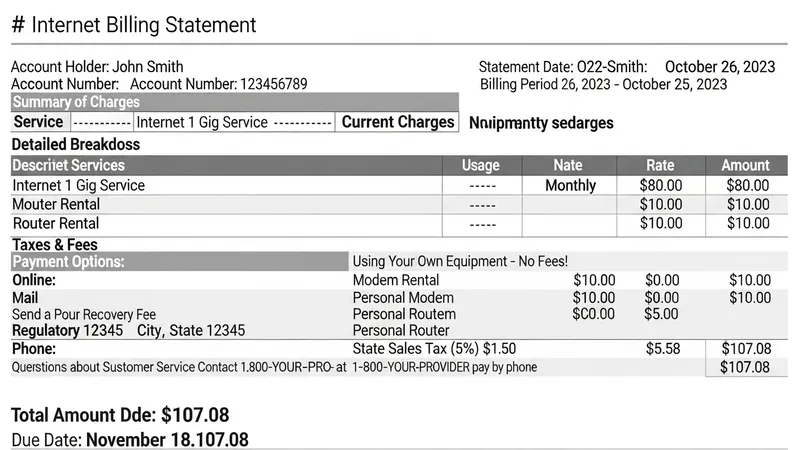
Some customers opt to provide their own modems or routers, as permitted by specific providers. The choice to use personal equipment may eliminate rental fees, though technical compatibility and support limitations are outlined in provider terms. When personal hardware is used, bills typically exclude equipment charges, making the billing statements different from those that include provider-leased devices.
When equipment is upgraded, replaced, or returned, these changes are often mirrored in the billing cycle that immediately follows. For instance, a one-time charge or credit for an equipment swap may be present. Transparent tracking of equipment fees supports consumer awareness about total costs and allows for verification of returned devices or upgrades.
Equipment charges may also be subject to local taxes or applicable surcharges based on state regulation. These added costs are listed alongside the rental or purchase fee on the bill, ensuring that all legally required disclosures are provided to the account holder in a single, consolidated statement.