
Industrial Automation Solutions: Enhancing Efficiency Through Technology Integration

Industrial automation solutions refer to the coordinated use of advanced technologies such as robotics, sensors, and programmable logic controllers (PLCs) within manufacturing and production environments to manage and monitor processes. These integrated systems are designed to help facilities streamline operational tasks by providing consistent, repetitive actions with minimal manual intervention. By enabling continuous data collection and analysis, automation setups may support a more organized approach to resource management and process coordination.
Key aspects of these solutions include precise control over production sequences, real-time monitoring of operations, and the ability to adjust system parameters promptly through centralized platforms. The integration of hardware and software components in industrial settings commonly follows a modular approach, which allows for gradual modernization based on organizational requirements. Emerging technologies associated with industrial automation also include machine vision and the Industrial Internet of Things (IIoT), which can further enhance connectivity and information flow.
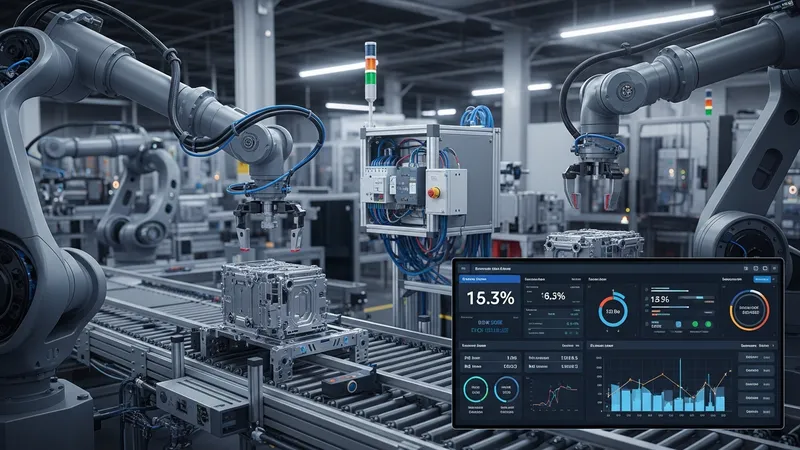
- Robotics Systems: Automated robotic arms or mobile robots used for material handling, welding, assembly, or packaging. They often feature sensors for position feedback and can be tailored for specific tasks within facilities.
- Programmable Logic Controllers (PLCs): Dedicated computer systems utilized to automate industrial processes, such as managing conveyor belts, production lines, and batching operations. PLCs offer scalability and adaptability for various automation scenarios.
- Supervisory Control and Data Acquisition (SCADA): Digital systems designed to monitor, visualize, and control plant operations in real time. SCADA platforms aggregate data from connected machines and provide operators with actionable insights.
Industrial automation solutions can offer more predictable process control by reducing variability in repetitive tasks. Facilities adopting these systems typically experience improved production scheduling due to continuous, round-the-clock operation capabilities. When combined with targeted data collection, these solutions may also enable detailed traceability and quality assurance by storing batch histories and equipment performance logs. Such attributes are especially relevant in sectors prioritizing consistent product standards.
Integration of automation technologies requires alignment between hardware components—such as actuators and sensors—and software platforms that facilitate system orchestration. Protocols enabling device communication and interoperability play an important role, as they determine how seamlessly new modules can be incorporated into existing production lines. Investments in automation may involve evaluating compatibility with current infrastructure and planning for phased technology upgrades.
Practical implementation can vary significantly depending on process complexity and scalability needs. Modular systems, for instance, may be introduced incrementally to manage risks and ensure continuity of core operations during deployment. Localized training and change management can be key factors when transitioning from manual or semi-automated to more digitized workflows. Over time, data-driven automation can support informed decision-making by highlighting trends and process anomalies.
Potential efficiency improvements typically stem from the ability to detect and respond to operational deviations in real time. Automated feedback loops—enabled by sensors, actuators, and control software—allow for immediate adjustments to parameters, such as speed or pressure, within tightly defined tolerances. This responsiveness can help reduce waste, downtime, or energy consumption, though actual results may depend on maintenance protocols and system integration quality.
In summary, industrial automation solutions promote structured process integration, allowing organizations to address production challenges using contemporary technologies. The next sections examine practical components and considerations in more detail.