
Hot Water Heater Repair: Understanding Causes Of Leaks And Inconsistent Temperature

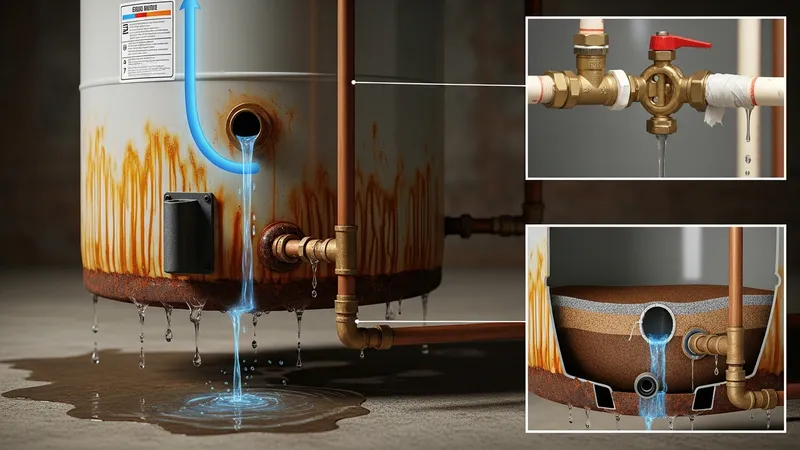
Leak sources: plumbing fittings, valves, and tank body considerations related to leaks and temperature
Visible leaks often originate at accessible plumbing fittings and valves before they appear at the tank body. Compression fittings, union joints, and threaded pipe connections may develop weeps as sealant degrades or fittings loosen from thermal cycling. Drain valves and inlet/outlet connections also may leak when internal seals wear. When a leak is present near a connection, the water may track along the exterior and make the true origin ambiguous, so isolating sections and rechecking after drying can help identify the primary source. These plumbing-related leaks can sometimes coincide with localized temperature effects if cold-water intrusion occurs near the outlet.
The tank exterior itself can indicate internal problems when corrosion appears as rust streaks or bulging. Corrosion that penetrates the tank shell usually produces consistent leakage and often correlates with age and water chemistry. Internally, sediment settles and can accelerate corrosion at the bottom, which may present as pooled moisture at tank base or persistent puddles despite valve-tightening efforts. While minor fitting leaks may be repairable with new seals or tightened fittings, tank body leakage from corrosion typically signals a more significant failure that can affect temperature regulation and safety systems.
Valves, including the temperature-and-pressure relief device, may discharge intermittently under certain pressure or temperature conditions and present as drip locations near the tank. A valve that opens regularly could indicate a pressure management issue elsewhere in the plumbing system or a malpositioned thermostat producing higher-than-intended water temperature. Intermittent discharge differs from steady leakage and often requires assessing both plumbing pressure (e.g., via inlet pressure checks) and thermostat settings. Documenting when discharge occurs—after long draws, during heating cycles, or at rest—provides useful context for diagnosis.
When investigating leaks, consider ambient factors that may mask or mimic tank problems. Condensation on tank surfaces in humid environments can appear like leakage but typically disappears when the tank warms. Likewise, leaks from fixtures above or connected pipes may drip onto tank areas and be misinterpreted as tank-origin leaks. Careful drying and repeated observation during a heating cycle often help differentiate condensation or external sources from genuine tank or fitting failures. These diagnostic distinctions are useful in planning whether targeted component servicing is likely to resolve the problem.